


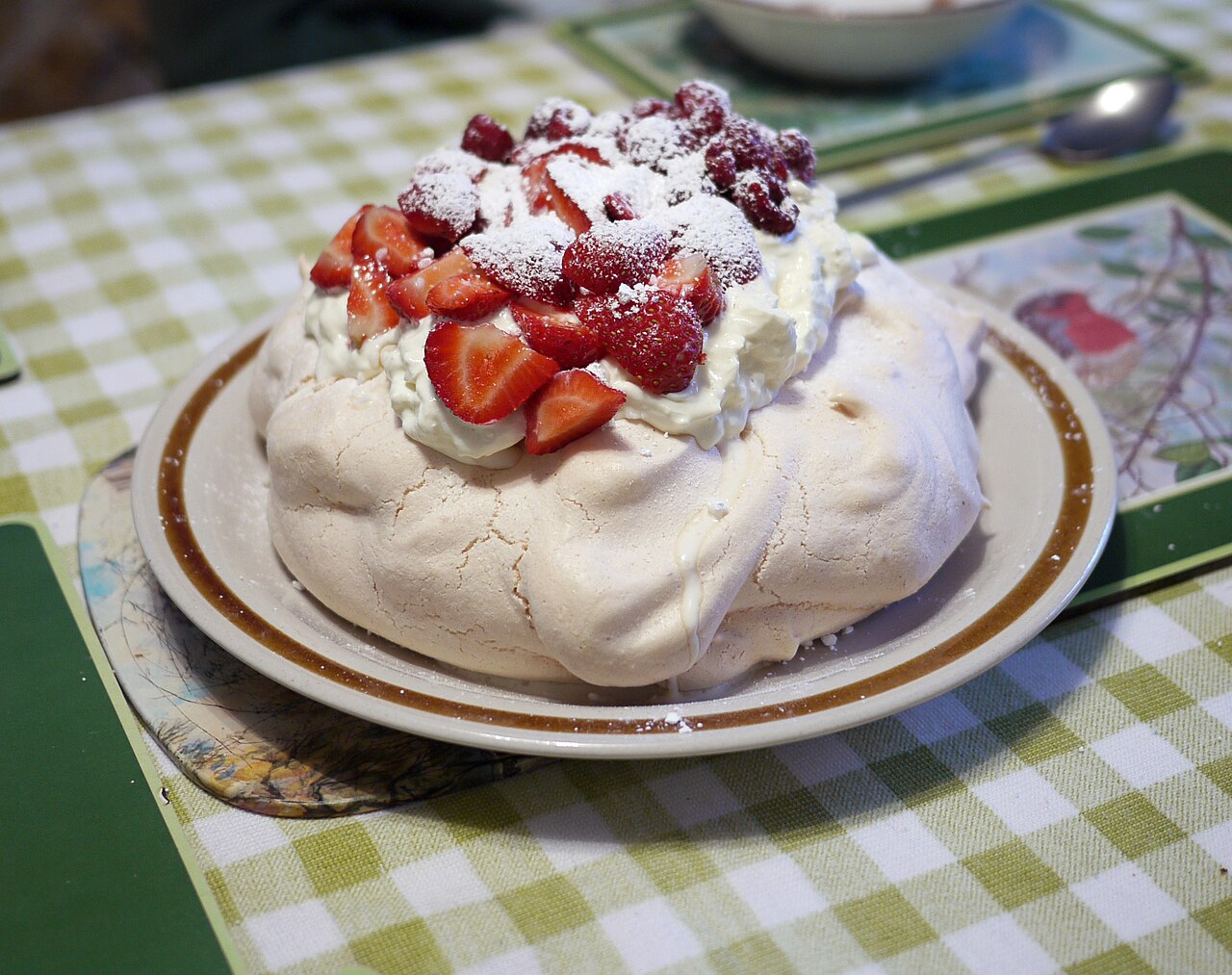
Pavlova is a baked meringue dessert with a crisp, pale shell and a soft marshmallow centre, topped with cream and fresh fruit. This recipe makes one 20 cm pavlova that serves about eight, with about 25 minutes of work and 1 hour 15 minutes in a 100 degrees Celsius fan-forced oven, plus cooling.
Ingredients
Serves about eight.
- 4 egg whites, at room temperature
- 220 g caster sugar
- 2 tsp cornflour
- 1 tsp white vinegar
- 1 tsp vanilla extract
- 300 ml thickened cream, whipped
- Fresh strawberries, kiwi fruit and passionfruit pulp, to top
Method
- Preheat the oven to 100 degrees Celsius fan-forced (120 degrees conventional). Draw a 20 cm circle on baking paper, flip it over and place it on a tray.
- Beat the egg whites in a very clean, dry bowl until soft peaks form.
- Add the sugar one tablespoon at a time, beating well after each addition. Keep beating until the mixture is thick and glossy and no grains are felt when you rub a little between your fingers.
- Gently fold in the cornflour, vinegar and vanilla.
- Spoon the mixture onto the circle and shape it into a round with a slight dip in the centre.
- Bake for 1 hour 15 minutes. The shell should look dry and pale cream. Turn the oven off and leave the pavlova inside with the door slightly ajar until completely cool, which can take several hours.
- Just before serving, top with whipped cream and fruit.

What makes a pavlova work
Any trace of fat or egg yolk stops the whites from whipping to full volume. Wipe your bowl and beaters with a little vinegar on paper towel, then dry them. Whites at room temperature whip with better volume than cold ones. Add the sugar slowly, because dumping it in at once can deflate the foam and leave grit in the shell. The same patience applies to our homemade marshmallow fluff, another egg white and sugar recipe.
Troubleshooting
| Problem | Cause | Fix |
|---|---|---|
| Weeping syrup beads on the shell | Sugar not fully dissolved, or oven too hot | Beat until smooth between fingers; bake low and slow |
| Cracks on top | Normal expansion and cooling | Cover with cream and fruit |
| Collapsed centre | Oven door opened early or cooled too fast | Leave the door shut, then cool inside the oven |
| Browned shell | Oven too hot | Lower the temperature, or check your oven with a thermometer |
| Sticky, chewy shell | Humid day or stored in the fridge | Bake on a dry day and store airtight at room temperature |
| Meringue will not whip | Yolk, fat or a greasy bowl | Start again with a clean bowl and fresh whites |
Substitutions and toppings
- Lemon juice can replace the vinegar in the same amount.
- Granulated sugar works if blitzed in a food processor for a few seconds until fine.
- Fold a little thick plain yoghurt through the cream for a tangier topping.
- Whip the cream only to soft peaks, as over-whipped cream turns grainy.
Passionfruit pulp is a classic topping, and if you want to grow your own, see our guide to growing and caring for passionfruit vines.
Making ahead and storing
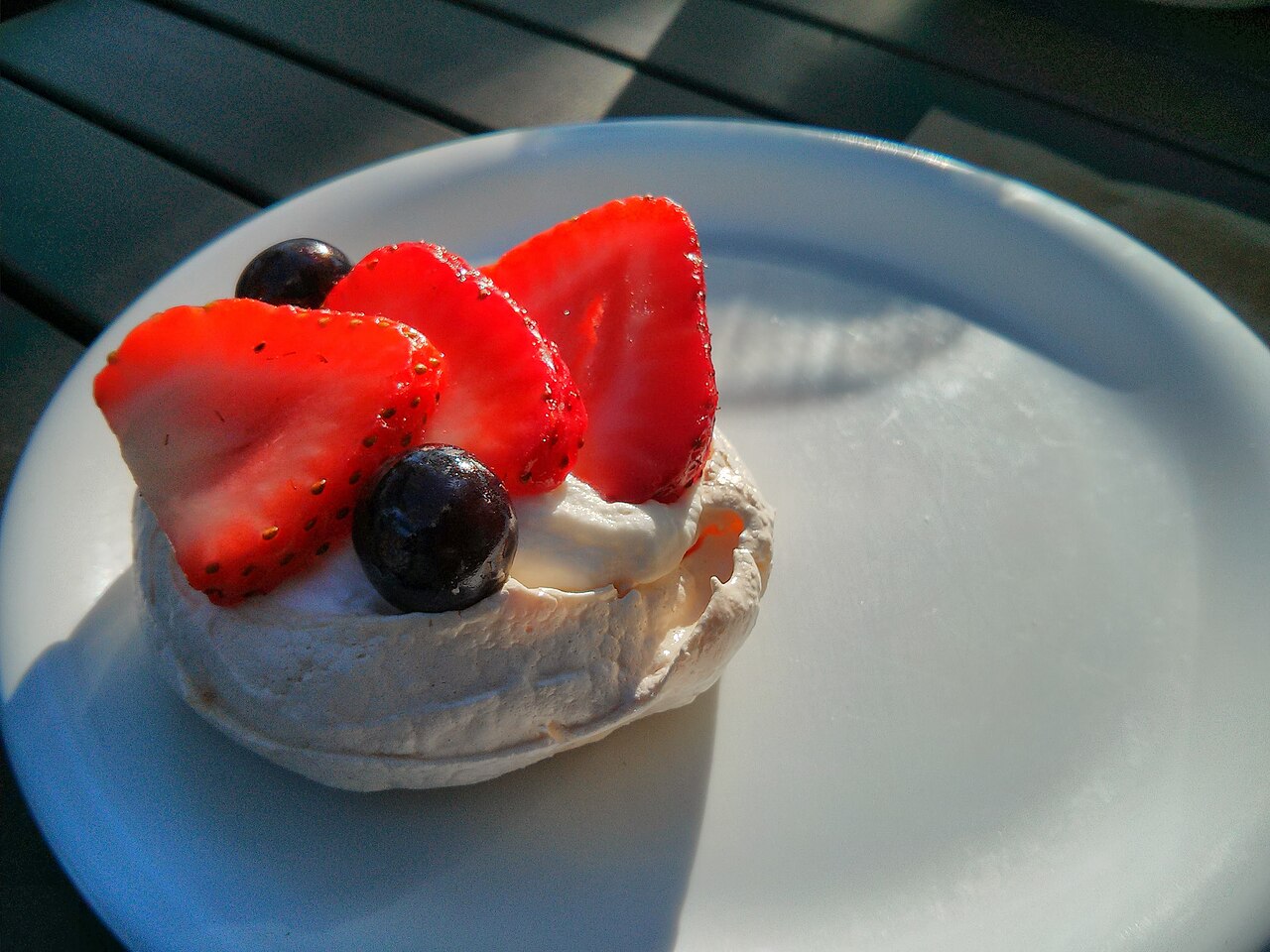
The baked shell can be made a day ahead and stored in an airtight container at room temperature. Avoid the fridge, which makes meringue sticky. Add the cream just before serving, because it softens the shell. To check doneness, the shell should feel dry and firm to a light touch and lift cleanly off the paper once cool. Separate the eggs while they are cold, as the yolk is less likely to break, then let the whites come to room temperature before whipping. You can use the leftover yolks in custard or scrambled eggs. Assembled leftovers keep in the fridge for no more than a day, though the shell will soften. For individual pavlovas, bake smaller rounds for about 45 minutes at the same temperature.

FAQ
Why did my pavlova crack?
Some cracking is normal as the meringue expands and cools. Cream and fruit hide it, and it does not affect the taste.
Why is my pavlova weeping?
Beads of syrup usually mean the sugar did not fully dissolve. Add it slowly and beat until the mixture feels smooth.
Can I make pavlova the day before?
Yes. Bake and cool the shell, store it airtight at room temperature, and top it just before serving.
What do the vinegar and cornflour do?
They help give the shell a soft, marshmallow centre and make the meringue more stable.