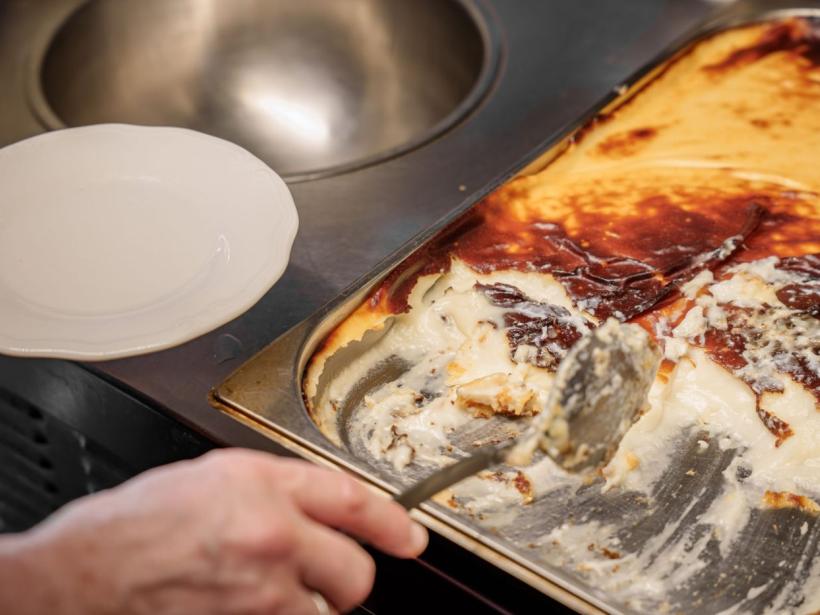
What makes rice pudding creamy?
Creaminess comes from the rice itself. Short-grain rice carries more surface starch than long-grain rice, and that starch releases into the milk as the grains soften and swell. The result is a thick, spoon-coating pudding rather than separate grains in thin milk.
Gentle, even heat matters too. Milk scorches and catches on a hot pan base, so the pudding needs a low, steady simmer with regular stirring early on. Long-grain rice will cook through but stays loose and watery, so it is the wrong choice here.
In Australian supermarkets, look for arborio or carnaroli in the risotto section, or plain short-grain rice sold as sushi rice. Any of these work well. Medium-grain rice such as Calrose is a reasonable fallback if that is what you have on hand.
Why does a thermal cooker need a hot start?

A thermal pot does not generate heat. It only slows heat loss, so the food itself must carry enough stored heat to finish cooking once the lid goes on. Bring the pudding to a full boil on the hob first, and the sealed outer pot then holds that temperature long enough for the rice to swell and the starch to thicken the milk.
Start from cold and there is no heat to retain. The milk sits in the warm zone where starch sets slowly, the rice stays chalky in the centre, and you end up reheating it on the stove anyway. A rolling boil at the start decides whether the pudding sets.
What you need for four serves
The ingredient list is short and everything comes from the supermarket. Use short-grain rice such as pudding or arborio style, because its higher starch is what thickens the milk into a creamy rice pudding. Long-grain rice stays separate and gives a watery result.
- 200 g short-grain pudding rice, rinsed briefly to remove loose starch
- 1 litre full-cream milk, which gives body and flavour, with an extra 200 ml to loosen the pudding later if needed
- 60 g caster sugar, easy to adjust to taste
- 1 teaspoon vanilla extract, or half a vanilla bean split lengthways
- A pinch of salt to lift the sweetness
- The thermal cooker itself: inner pot with a firm-fitting lid and the insulated outer pot
Check the inner pot holds at least 1.5 litres, since milk rises as it boils. Keep a heatproof jug and a dry tea towel on hand for handling the hot inner pot. If you plan to add sultanas, measure out about 50 g now so they go in with the milk rather than at the end.
How do you cook it step by step?

Bring the rice, milk and sugar to a boil on the hob, boil for 3-4 minutes, then seal the pot and leave it to finish in the outer pot for 60-90 minutes. The hob stage starts the cooking; the sealed pot holds the heat for the rest.
- Tip 900 ml milk, 100 g short-grain rice, 60 g caster sugar and a pinch of salt into the inner pot and stir.
- Set the pot on medium heat and stir often until the milk simmers, then boil for 3-4 minutes, stirring so the rice does not catch.
- Add a teaspoon of vanilla and stir once, then lift the hot pot into the outer pot with a cloth or oven mitts.
- Seal the lid and leave it closed for 60-90 minutes. Do not open the lid during this time.
- Open the lid, stir, and serve hot into bowls. Do not leave the pudding to cool in the pot.
Once the lid is sealed, the rice absorbs milk steadily, so resist checking. Every peek releases steam and heat, and the pudding thickens more slowly.
What happens if you open the lid?
Every peek costs cooking time. The sealed outer pot works because the heat trapped inside the inner pot keeps the rice cooking in the milk, and lifting the lid lets that heat escape in seconds. You lose the steam cushion around the food, the temperature drops well below the simmer point, and the rice stops absorbing liquid. A 30-second check can set the pudding back by 15-20 minutes, and the texture often turns grainy because the rice firms up as it cools.
If you must check, do it once, quickly, near the end of the holding time. Lift the lid straight up rather than tilting it, look without stirring, and close it firmly. If the pudding looks thin, give it the full remaining time rather than topping up the heat, and stir only when you serve. A thin result can also be fixed off the heat with an extra splash of warm milk stirred through, which loosens it if it has set firmer than you like.
How long does it hold and how thick does it get?

A thermal pot holds rice pudding hot for about 1-3 hours after the cooking time ends, and the pudding keeps thickening throughout. The rice keeps drawing in milk, so a mix that looks loose when you open the lid turns spoonable within 20-30 minutes. Check it at the shorter end if you like a pourable pudding.
Serve it hot from the pot. Do not leave the pudding to cool inside the thermal pot: once it drops below about 60°C, the sealed, insulated space holds that warmth for hours, which is exactly what bacteria need. Spoon leftovers into a shallow container, cool them quickly and refrigerate within 2 hours.
- Stir in a splash of hot milk before serving if the pudding has set firmer than you like.
- Expect a thick, spoon-standing set after 2-3 hours of holding.
- Keep the lid closed between serves to hold the heat.
- Reheat leftovers on the stovetop with extra milk, stirring, until steaming.
Can you make it on the stovetop or in the oven?
Yes. For a stovetop pudding, combine the same rice, milk, sugar and vanilla in a heavy-based saucepan and simmer gently for about 30-40 minutes, stirring often so the milk does not catch on the base. Stop when the rice is soft and the mixture coats the back of a spoon.
In the oven, bake the combined ingredients in a covered dish at about 150C for 1.5-2 hours, stirring once halfway through. Both methods work well, but they need your attention, which a thermal pot does not. Serve the pudding hot either way, and refrigerate any leftovers rather than leaving them to cool in the pot.
Frequently asked questions
Can I use long-grain rice instead of short-grain?
Yes, but the texture will be looser and less creamy. Short-grain varieties release more starch, which is what thickens the milk into that soft, spoonable pudding. If long-grain is all you have, expect a thinner result and slightly shorter cooking time.
Do I need to stir rice pudding in a thermal pot?
No. Once the pot is sealed, leave it alone. Stirring means opening the lid, which lets the heat out and slows the cooking. Give it one good stir at the end, after the sealed time, to loosen the surface before serving.
How long can the pudding sit in the pot?
Serve it hot, within about an hour of the sealed time finishing. Do not leave food to cool slowly in the pot. If you have leftovers, transfer them to a shallow container and refrigerate them promptly rather than letting them sit at room temperature.
Why did my pudding catch on the bottom?
The most common cause is too high a heat during the hob stage. Bring the milk and rice to a boil over medium heat and stir often so nothing sticks. A heavy-based pot helps spread the heat evenly and reduces scorching.
Photo: Yasin Onuş, Pexels (Pexels License)