
Which herbs grow best in Australian conditions?
Warm-season herbs that cope with dry heat are the easiest to start with. Basil, rosemary, thyme, oregano and sage thrive in most parts of Australia from spring through autumn and need little more than sun and well-drained soil. Parsley and chives handle a bit of shade, so they fit the cooler corner of a balcony or a spot that gets morning light only.
In cool-season gardens, coriander, dill and chervil grow fast before the heat arrives. Mint is a perennial that runs rampant in the ground but stays well-behaved in a pot, and it keeps producing in all but the coldest weeks of winter. Annual herbs like basil and coriander finish their life in one season, while perennials such as rosemary and thyme will sit in the garden for years.
- Basil is a warm-season annual that needs full sun and shelter from wind.
- Rosemary is a perennial shrub that handles coastal salt spray and poor soil once established.
- Thyme is a low-growing perennial that spreads as ground cover and likes a sunny, well-drained spot.
- Parsley is a biennial grown as an annual; it tolerates part shade and regular picking keeps it leafy.
- Coriander is a cool-season annual that bolts quickly in heat, so sow it in autumn or early spring.
- Mint is a spreading perennial best kept in a container to stop it taking over the garden.
How much sun and water do herbs really need?
Most culinary herbs need at least six hours of direct sunlight each day. In southern states like Victoria and Tasmania, a full day of sun works well. In Queensland and northern NSW, afternoon shade in summer stops leaves from scorching. A spot that gets morning sun and filtered light after midday suits most herbs across the country.
Water herbs deeply when the top two to three centimetres of soil feel dry. Push a finger into the soil to check, rather than watering on a fixed schedule. Pots dry out faster than garden beds, so container herbs often need water every day during a heatwave, while in-ground herbs might go two or three days between drinks. Always water the soil, not the leaves, to reduce fungal problems.
- Wilting leaves that perk up at night signal heat stress, not a lack of water. Move pots to a shadier spot on extreme days.
- Yellow lower leaves and soft stems usually mean overwatering. Let the potting mix dry out more between waterings.
- Crispy brown leaf edges point to sunburn. Shade cloth or a move to a spot with dappled afternoon light fixes this.
- Mulch garden beds with pea straw or sugarcane mulch to keep roots cool and hold moisture longer.
Should I grow herbs in pots or in the ground?
Pots give you the most control. They are the obvious choice if you rent, have a small balcony or want to move plants with the seasons. In-ground planting suits homeowners who want a larger, lower-maintenance patch and have good natural soil. A raised bed sits between the two: it drains better than clay soil and keeps roots cooler than a pot on a hot day.
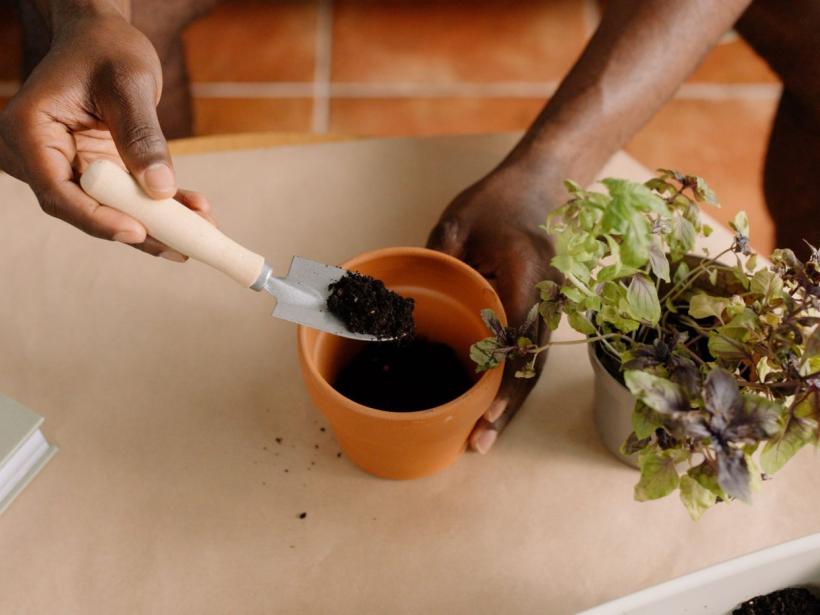
For pots, use a quality potting mix labelled "premium" or "for herbs and vegies", never garden soil which compacts and suffocates roots. Make sure the container has at least one drainage hole. In summer, group pots together to shade each other and move heat-sensitive herbs like coriander and parsley to a spot with morning sun only. Terracotta breathes well but dries out fast, plastic holds moisture longer and is lighter to shift, and large troughs let you grow several herbs in one container.
If you plant in the ground, dig through a bag of compost and a handful of gypsum if you are on heavy clay. Mound the soil slightly so water never pools around the stems. You cannot chase the sun or escape a week of scorching weather with in-ground herbs, so watch a site across all four seasons before you commit.
What is the easiest way to start a herb garden from scratch?
Seedlings from your local nursery give you a head start of four to six weeks over seeds. You also skip the delicate germination stage. Pick a spot that gets morning sun and some afternoon shade, especially if you live in a hot inland area. A patch roughly one metre by one metre is plenty for four or five different herbs.
Clear any weeds, then dig a bucket of compost into the top 20 centimetres of soil. If your ground is heavy clay, mix in some coarse river sand so water drains freely. Water the soil lightly a few hours before planting so the roots settle into moist ground without sitting in mud.
Here is the simplest planting sequence:
- Soak each seedling pot in a shallow tray of water until the mix is damp right through.
- Dig a hole twice as wide as the pot and just as deep as the root ball.
- Gently tease out any circling roots, then set the seedling in the hole at the same depth it was in the pot.
- Firm the soil around the stem with your fingers, not your fist, so you do not compact it.
- Space low growers such as thyme and oregano about 20 centimetres apart, and give larger herbs like basil and parsley at least 30 centimetres.
- Water the bed with a soft shower from a watering can or a hose set to a fine mist setting.
Mulch lightly with pea straw or sugarcane mulch, leaving a clear ring the size of a saucer around each stem so the crown stays dry. In the first week, check the soil each morning and water only when the top centimetre feels dry to the touch.
How do I keep herbs productive month after month?
Harvest herbs regularly to keep them producing fresh leaves. Most culinary herbs branch out and become bushier when you cut them often, so you get more to pick over a longer season. Use clean scissors or secateurs and never remove more than one third of the plant at a time. For soft annuals like basil and coriander, cut whole stems just above a pair of leaves rather than picking individual leaves, as this encourages two new shoots from that point.
Pinching out flower buds as soon as they appear redirects the plant's energy back into leaf production. Once basil, coriander or mint flower and set seed, the leaves often turn bitter and the plant begins to decline. Feed lightly every three to four weeks during the active growing season to replace nutrients washed out by watering. Use a half-strength liquid seaweed solution or a mild organic fertiliser. Herbs rarely need heavy feeding, and too much nitrogen can dilute their flavour.
As the seasons shift, some herbs will naturally slow down or look tired. In warm parts of Australia, cut back leggy perennials like oregano, thyme and marjoram by about a third in early autumn. This promotes a flush of fresh growth before winter. Replace annuals that have bolted or turned woody. Sow a fresh batch of quick growers such as coriander or dill every six to eight weeks for a continuous supply.
- Harvest stems regularly with clean snips, taking no more than one third of the plant each time.
- Pinch off flower buds the moment they appear to keep leaves tender and flavoursome.
- Apply a half-strength liquid seaweed feed every three to four weeks during peak growth.
- Cut back woody perennials by roughly one third in early autumn to refresh the plant.
- Sow quick annuals like coriander and dill in batches every six to eight weeks for ongoing harvests.
Frequently asked questions
Can I grow herbs indoors in Australia?
Yes, you can grow herbs indoors if you have a spot that gets at least four to six hours of direct sun, such as a north-facing windowsill. Compact varieties like chives, thyme and dwarf basil do well inside. Rotate the pots weekly so the plants grow evenly and do not lean toward the light.
How often should I water herbs in hot weather?
During a run of hot days, check the soil every morning by pressing a finger into the top few centimetres. If it feels dry, water slowly until it runs out the bottom of the pot. In a garden bed, a deep soak two or three times a week is usually better than a daily light sprinkle, which encourages shallow roots.
Why do my herbs go to seed so quickly?
Herbs bolt when they are stressed by heat, dry soil or overcrowding. Picking leaves often and pinching off flower buds as soon as they appear keeps the plant in leaf-growing mode. Once a plant has set seed, the leaves often turn bitter, so it is best to replace it with a fresh seedling.
Which herbs can I grow together in one pot?
Group herbs that like similar conditions. Mediterranean types such as rosemary, thyme and oregano grow well together in a wide pot with gritty potting mix. Moisture-loving herbs like mint, parsley and chives can share a container if you keep the soil damp. Keep mint in its own pot or a submerged bucket, as it spreads quickly and will take over.
Photo: cottonbro studio, Pexels (Pexels License)