
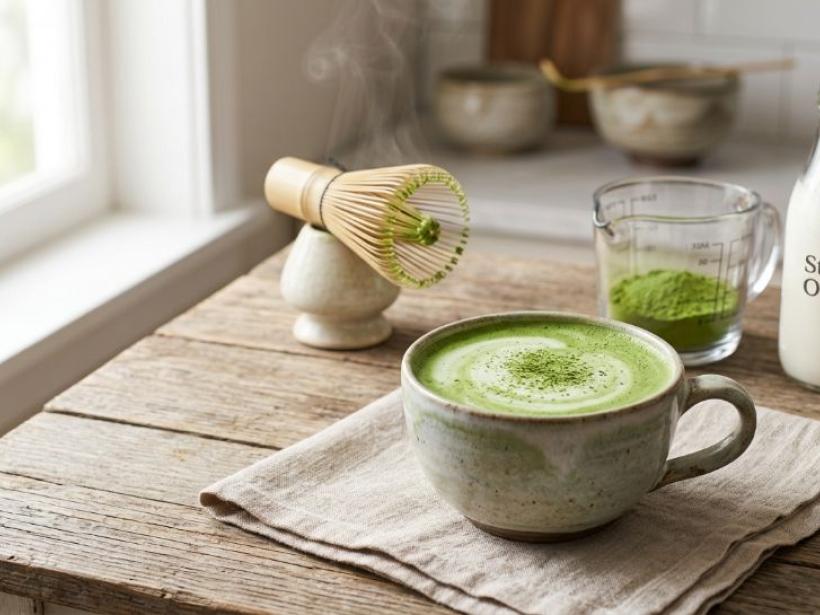

A matcha latte is matcha powder whisked with hot water, then mixed with milk. No espresso machine needed. The whole thing takes under 5 minutes.
What Is a Matcha Latte?
Matcha latte is whisked green tea powder mixed with milk, hot or iced. Regular tea has steeped leaves, so you're drinking the water that passed through them. Matcha is the whole leaf ground into powder, so you're drinking the leaf itself. That's why one cup can carry 35 to 70mg of caffeine, depending on the grade, more than most brewed green tea.
How to Make Matcha Latte at Home (Step by Step)
Whisk matcha into a paste with hot water, loosen it, add warm milk. That's the whole method.
- Sift 1 to 2 teaspoons of matcha into a bowl. Skip this step and you'll get clumps later.
- Add 2 to 3 tablespoons of hot water, around 175°F (not boiling; boiling water burns matcha and turns it bitter).
- Whisk fast, in a "W" shape, for 15 to 20 seconds until it's frothy.
- Heat or steam 8oz of milk.
- Pour the matcha into the milk and stir.
How Do You Whisk Matcha Without a Bamboo Whisk?
A milk frother or a small regular whisk works fine.
The bamboo whisk (chasen) is traditional, and its thin tines do avoid clumps well, but you don't need one. A cheap electric frother gets there in about 20 seconds. A metal whisk works too, though it's worth using a glass or plastic bowl instead of ceramic, since metal can scratch it.
How to Make Hot Matcha Latte
Whisk the matcha paste first, then pour in milk heated to 140 to 150°F.
Push past 155°F and the milk starts tasting scalded, which throws off the matcha flavor with it. Steam the milk on its own rather than heating everything together, then combine at the end.
How to Make Iced Matcha Latte at Home
Whisk matcha with cold water, then pour it over ice with cold milk.
No hot water here. Matcha dissolves fine in cold water if you whisk it hard for about 30 seconds. Pour the matcha over the ice first, then the milk on top, and you get the layered green-and-white look most iced versions are known for.
How to Make the Best Matcha Latte at Home
Good matcha, sifted properly, and water that isn't too hot.
Three things actually change the outcome:
- Grade: ceremonial grade tastes smoother. Culinary grade is meant more for baking and tastes harsher on its own.
- Water temperature: above 175°F, matcha turns bitter and clumpy.
- Ratio: start with 1 teaspoon of matcha per 8oz of milk, then adjust from there based on taste.
Matcha Latte Ratios: Hot vs Iced
|
Style |
Matcha |
Whisk with |
Milk |
Serving temp |
|
Hot |
1 to 2 tsp |
2 to 3 tbsp hot water (175°F) |
8oz steamed |
140 to 150°F |
|
Iced |
1 to 2 tsp |
2 to 3 tbsp cold water |
8oz cold, over ice |
Chilled |
How to Make Green Tea Latte at Home Without Matcha
Steep a strong green tea bag, then mix the concentrate with steamed milk.
This isn't technically a matcha latte, since you're steeping rather than drinking the whole leaf, so the color and antioxidant content will both be lighter. Steep 1 bag in 2oz of water for 4 to 5 minutes to concentrate it, then treat it like matcha paste and mix with warm milk.
What Milk Works Best?
Oat milk froths well and tastes neutral. Whole milk is the creamiest option. Almond milk is thinner and can split if it gets too hot.
Oat milk has become the common choice because it steams close to dairy and doesn't compete with the matcha flavor. Whole milk gives the richest texture, closer to what you'd get at a coffee shop. If you're using almond milk or anything thinner, keep the heat a little lower since it separates more easily.
Can You Make Matcha Latte Without a Whisk?
Yes. A jar with a tight lid works, if you shake it hard enough.
Put the matcha and hot water in a small jar, screw the lid on, and shake for about 20 seconds. It won't be as smooth as whisking, but it gets the matcha dissolved if that's all you have on hand.
A Quick Real Example
In 2026, several home baristas reported switching from a metal whisk to a $6 handheld frother and cutting their prep time from about 90 seconds down to 20, with noticeably less clumping. That one small change fixes the most common complaint people have about matcha lattes: gritty texture.
Common Mistakes to Avoid
- Boiling water. It scorches the matcha and leaves a grassy, bitter taste.
- Skipping the sift. That's usually the reason for clumps in the first place.
- Adding matcha straight into hot milk instead of whisking it into water first.
Final Thoughts
Keep the water under 175°F, and always whisk the matcha into water before the milk goes in. Those two habits matter more than the equipment you use. Once they're set, hot, iced, or dairy-free versions are all just small variations on the same base.