
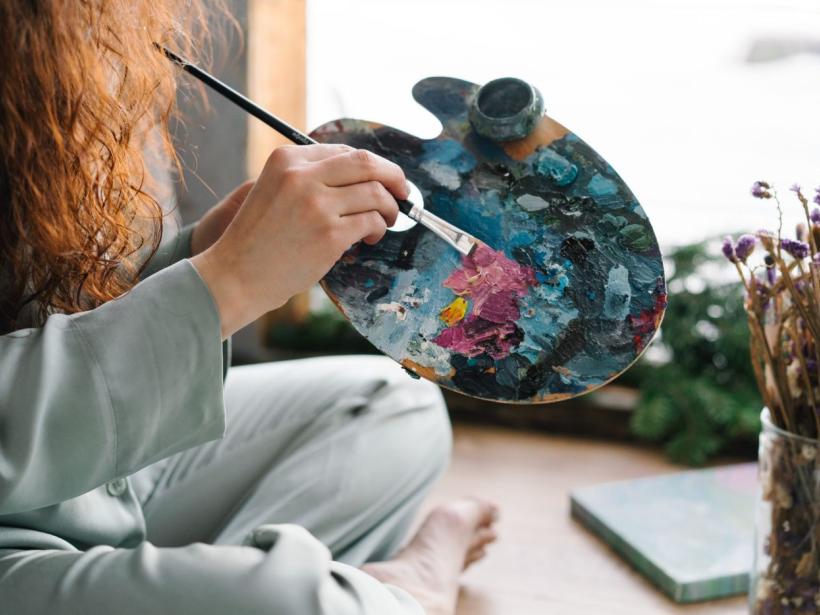
What two colours make brown paint?
You can make brown paint by mixing two complementary colours that sit opposite each other on the colour wheel. The classic pair is blue and orange. When you combine them in roughly equal amounts, each colour cancels the other's brightness and the mix shifts into a neutral brown.
This works because orange already contains red and yellow. Adding blue brings all three primary colours together, which is the foundation of any brown. Start with a small blob of orange on your palette and add blue a tiny drop at a time. The colour will darken quickly through a warm, earthy brown before moving toward a cooler, muddier tone if you add too much blue.
Other complementary pairs also produce brown. Purple and yellow give a softer, more muted brown, while red and green create a richer, deeper shade. To test quickly, try each pair on a scrap of plasterboard and note how the undertone shifts.
How to Mix Brown from Primary Colours

You can create a basic brown using equal parts of red, yellow and blue paint. This method works with acrylics, watercolours and most wall paints, though the exact result depends on the pigment strength of your specific brand.
Start with small amounts on a palette or a clean white plate so you can see the true colour as it blends. Mixing your own brown from primaries gives you full control over the warmth or coolness of the final shade, which is harder to achieve with a pre-mixed tube.
For a reliable result:
- Squeeze a pea-sized amount of red, yellow and blue paint onto your palette, keeping them separate to begin with.
- Take roughly equal portions of red and yellow with a palette knife or flat brush and blend them into a clean orange.
- Add the same amount of blue to the orange a little at a time, mixing thoroughly after each addition.
- Stop when the mix turns milk chocolate. You can always add more blue but you cannot take it out.
- If the brown looks dull or muddy, a tiny dot of red or yellow brings back warmth.
- Scrape a small sample onto a white card and let it dry for five minutes. Wet paint always looks darker, so judge the dried colour.
How to adjust the shade of your brown

Once you have a basic brown, you can shift it in any direction with tiny additions of other paint. Stir in a drop at a time with a clean mixing stick. A little paint goes a long way, and you can always add more but you cannot take it out.
White lightens the brown into a tan or beige, useful for a softer, airier look. Black deepens it to a rich espresso or chocolate tone. For a warmer brown with a golden or reddish glow, add a touch of yellow or red. A cooler, more muted brown with an earthy or olive cast comes from a tiny bit of blue.
- White lightens the brown to a pastel tone.
- Black deepens the brown to a darker shade.
- Red or yellow warms the brown.
- Blue cools and mutes the brown.
- A drop of the complementary colour (a touch of blue into a warm brown) dulls the shade without darkening it.
How to match an existing brown colour

Every batch of mixed paint dries a fraction darker or cooler than it looks when wet. To match a fabric swatch, a tile or a painted piece of furniture, tape the reference item to a piece of white card and paint a 50 mm square beside it. Let the sample dry fully in the same light you will use the room, because warm LED downlights shift the colour completely compared with north-facing daylight.
Start with a base that is slightly lighter than the target. Add the dominant undertone in tiny amounts with the end of a paddle-pop stick, counting the drops. A warm timber brown might need a speck of red oxide, while a cool mushroom brown often wants a touch of raw umber or a pinhead of black. Stir thoroughly, paint a fresh swatch next to the previous one on the card and let it dry before judging. Repeat until the dry swatch disappears against the reference.
If the colour still reads too yellow or too pink once it is on the wall, do not keep adding tint to the same pot. Tip a small measured quantity into a clean container and adjust that, keeping the main batch untouched as a fallback. Write down the recipe as you go so you can mix a full tin later without guessing.
Why you should always test your mixed paint first
Mixed paint almost always dries a shade darker than it looks when wet. The difference is most obvious with acrylics and water-based wall paints, which lighten as the water evaporates. Oils and enamels shift less but still settle into a deeper tone. A patch that looks like warm caramel in the tin can dry to a flat mud colour on the wall, especially on porous surfaces that drink up the binder.
Brush a sample about the size of a credit card onto the actual surface you plan to paint. Let it dry fully, which takes two to four hours for acrylics and up to eight for oil-based mixes. Check the colour in daylight and under the room's usual evening lighting. Move the sample around the wall. A brown that feels rich and chocolatey near the window can turn cold and grey in a darker corner.
If the dried tone is not right, tweak your batch in small steps. Add a dab of white to lighten, a touch of blue to cool it down, or a speck of red or yellow to warm it up. Record your ratios as you go. The most frustrating thing is mixing the perfect brown, running out halfway through the second coat, and being unable to recreate it.
Frequently asked questions
Can I make brown without blue paint?
Yes. You can mix red and green, which are complementary colours, to produce a brown. The exact shade will depend on the specific red and green you use. A bright red with a dark green often gives a rich, earthy brown.
What is the easiest way to make dark brown paint?
Start with a basic brown mix from red, yellow and blue. Then add a very small amount of black or a touch more blue. Add it a drop at a time; the colour darkens quickly.
Why does my mixed brown look muddy?
A muddy brown usually means one colour has overpowered the others, often blue. Try adding a little more red and yellow to warm it up. Mixing thoroughly also helps to avoid streaks of pure colour that can look dull when combined.
Photo: Mikhail Nilov, Pexels (Pexels License)