
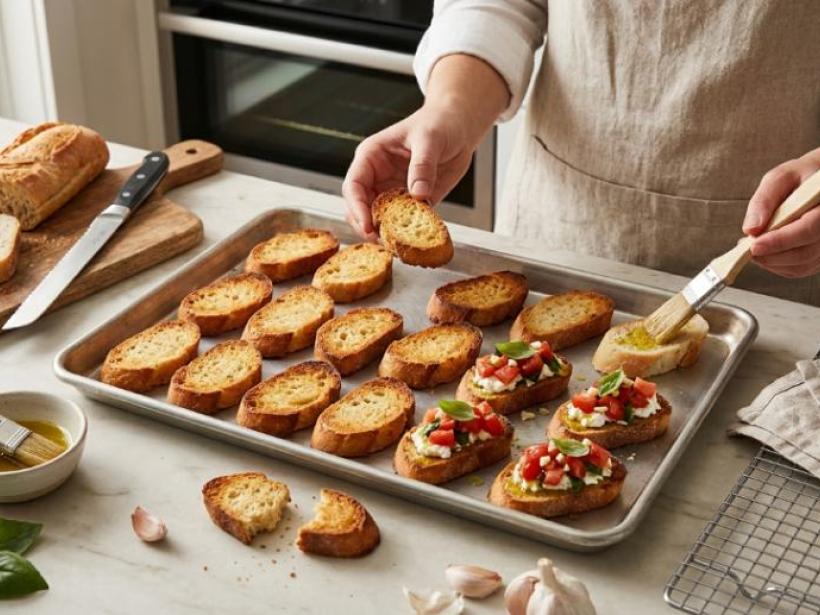

How to make crostini comes down to one thing most recipes skip: managing water, not just heat. Bake bread at the right temperature and you control how moisture leaves the slice. Get that wrong, and no amount of oil or oven time fixes it.
Slice a baguette, brush with olive oil, bake at 425°F for 8-10 minutes. The bread crisps from the outside in, so a hot oven matters more than long bake time. That's the short version. The reasons behind it are what most guides leave out. If you're baking your own loaf to slice up, our bread loaf recipe is a solid base to start from.
Why does crostini turn out doughy in the middle?
Crostini crisps from the outside in. The crust hardens while water inside the slice is still evaporating and pushing outward. A piece can look golden and still be soft in the center because the surface finished drying before the interior did.
What oven temperature actually works?
425°F or higher works best. At 350°F, the surface and interior dry at close to the same rate, giving you soft, evenly toasted bread instead of a crisp shell. The temperature isn't a preference, it's the mechanism.
Should you use stale bread or fresh bread?
Stale bread crisps faster, but not because it's "dry." It's already lost structural water, so there's less moisture fighting the surface during baking. Fresh bread works too, just lower the oven by 25 degrees and add two to three extra minutes.
- Stale bread: bakes faster, snaps cleaner
- Fresh bread: needs lower heat, longer time
2026 test result: Baking the same loaf two ways, one half stale overnight, one half fresh, the stale half finished 2 minutes faster with a cleaner snap. The fresh half, baked identically, still had a faint give in the center.
| Bread type | Oven temp | Bake time |
|---|---|---|
| Stale baguette | 425°F | 8 min |
| Fresh baguette | 400°F | 10-11 min |
Why does crostini go soft under toppings?
Wet toppings soften bread on contact. A thin layer of fat (butter, oil, or melted cheese) between the toast and the topping blocks moisture from soaking in, since fat is hydrophobic. This is the same reason pizza crust holds up better under sauce when cheese sits between them. A tomato-based topping like the sauce in our spaghetti marinara is a good example of the kind of wet topping this fat barrier protects against.
- Fat barrier before topping: butter, olive oil, or cheese
- Assemble last minute: works, but isn't required if you use a fat layer
FAQ
How thick should crostini slices be?
About half an inch. Thinner burns before toppings matter, thicker stays doughy.
Can I make crostini ahead of time?
Yes. Store baked crostini in a sealed container at room temperature for up to 3 days. They also pair well as a side with healthy snacks for adults if you're prepping a spread ahead of time.
Why is my crostini chewy instead of crisp?
Usually the oven wasn't hot enough, or the tray was crowded, slowing moisture loss.
Does the type of bread change the method for how to make crostini?
Not the method, just the temperature and timing, as shown in the table above.
Conclusion
How to make crostini that stays crisp depends on managing moisture, not just following steps. Use the right temperature for your bread's condition, and add a fat barrier before wet toppings. Bread-based dishes like this are just one corner of what's covered in discovering Australian food and its true flavors.
Try it tonight: pick your bread, set your oven, and bake your first batch.