
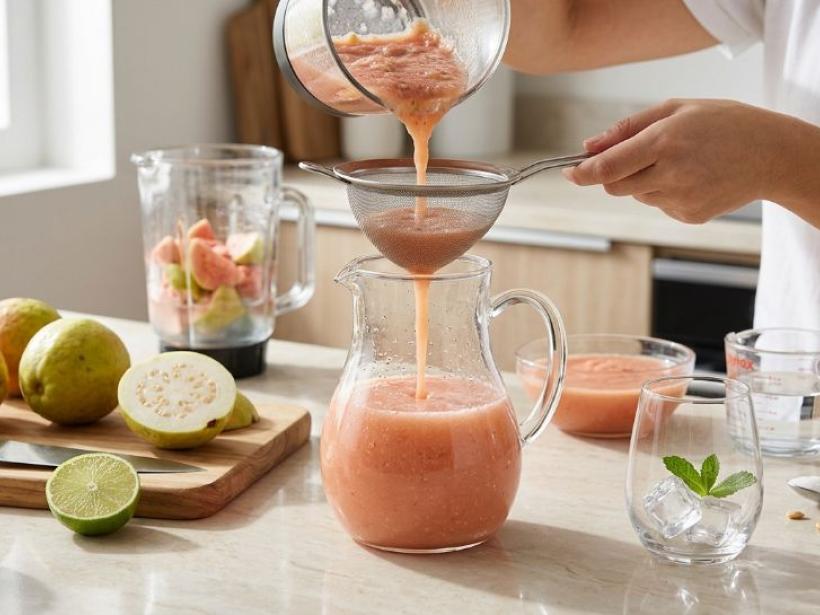

Blend ripe guava with water, strain the seeds out, add sugar and lime to taste. That much you can get from any recipe. What most recipes skip is why the juice sometimes comes out gritty, or turns brown in the fridge before you've even finished the glass. Fix those two things and the rest is easy.
Why does guava juice turn out gritty?
Guava seeds are small but tough, and a blender running for a full minute on high grinds them down to something fine enough to slip through a mesh strainer. So you strain your juice, it still feels sandy, and you assume the strainer failed. It didn't.
Here's the fix, step by step:
- Chop the guava into rough pieces, no need to peel.
- Add water and pulse for 8 to 10 seconds at a time, not one long blend.
- Stop and check the texture between pulses.
- Strain once the mixture looks smooth, not grainy.
You lose maybe fifteen seconds of convenience and gain a genuinely smooth glass of guava fruit juice.
How does ripeness change the ratio?
A firm guava and an overripe one aren't really the same ingredient. They carry different amounts of pectin and natural sugar, so pouring the same cup of water over both gives you two different drinks.
|
Ripeness |
Water per guava |
Sugar needed |
|
Firm, barely fragrant |
1/4 cup |
Usually yes |
|
Soft, strongly scented |
1/3 cup |
A little or none |
|
Very soft, almost too ripe |
1/2 cup |
Rarely (often plenty sweet) |
If you're trying to figure out how to make a guava juice without dumping in sugar, the honest answer is: buy the fruit a day or two past what looks "ready." It won't keep as long, but it saves you the sweetener. If you'd rather skip the shop altogether, guava behaves a lot like growing your own passionfruit vines: leave it longer on the plant and you get sweeter fruit with less work at the blender.
Should you use white or pink guava?
Pink guava has more tannin, and you'll notice it as a faint dryness on the tongue, similar to a strong black tea. That's not a defect, and coconut water tames it better than plain water does. White guava is milder and blends more neutrally, which makes it the safer pick if you're folding guava into another juice (like a fruit punch) rather than serving it on its own.
Add the lime before you blend, not after
Guava browns fast once it's cut open, faster than most fruit its size, because the same vitamin C that makes it good for you also reacts quickly with air. Most recipes tell you to squeeze lime in at the end, to taste. Do it before blending instead. The acid slows the browning enough that fresh guava juice holds its color for hours in the fridge, not just for the first pour.
Freeze the pulp, skip the prep next time
Strained guava pulp freezes cleanly for a few months. Pour it into an ice cube tray, freeze, then bag the cubes. A few reasons this is worth doing:
- Homemade guava juice becomes a thaw-and-dilute job, no chopping required.
- You can make a single glass instead of a full batch.
- It's a fair addition to your rotation of healthy snacks for adults when you want something quick but not empty calories.
FAQ
How to make fresh guava juice at home? Chop ripe guava, blend it with water, strain out the seeds, then add sugar and lime to taste. Chill before serving for the best flavor.
How to make guava drink at home? The base is the same juice, but a "drink" version usually gets topped up with sparkling water, ice, and a few mint leaves for a lighter, more mocktail-style glass.
My guava juice separated in the glass. Did it go bad? No, that's pectin settling out. Give it a stir.
Can I use unripe guava if that's all I can find? You can, but soak the chopped pieces in warm water for a bit first, and expect to add more sugar.
Does freezing change how it tastes? Only slightly, you lose a bit of aroma, not the sweetness or the tang.
Blender or juicer, which gives a better result? Blender keeps more fiber and body. Juicer gives you a thinner, clearer drink with almost no pulp.
How long can guava juice last? Fresh, unpasteurized juice keeps for about 2 to 3 days in a sealed container in the fridge. For longer storage, freeze the pulp instead and blend fresh juice as needed.
What happens if we drink guava juice daily? A daily glass adds vitamin C, potassium, and fiber, especially if you skip added sugar. If you do sweeten it, keep portions moderate since the calories from sugar add up over a week.
What organ is guava good for? Guava's fiber and potassium support heart and digestive health, and its vitamin C content supports the immune system. It isn't a treatment for any organ or condition, just a nutrient-dense addition to a normal diet.
Is guava juice good for your kidneys? For most healthy people, yes, the potassium and antioxidants in guava fit into a kidney-friendly diet. If you have existing kidney disease and need to watch your potassium intake, check with your doctor before making it a regular habit.
Next time you're making guava juice, try the two small changes: pulse instead of blending straight through, and add the lime first. Same fruit, noticeably better glass. It's a small thing, but it's the kind of detail worth knowing if you're discovering Australian food and its true flavours beyond the usual list.