
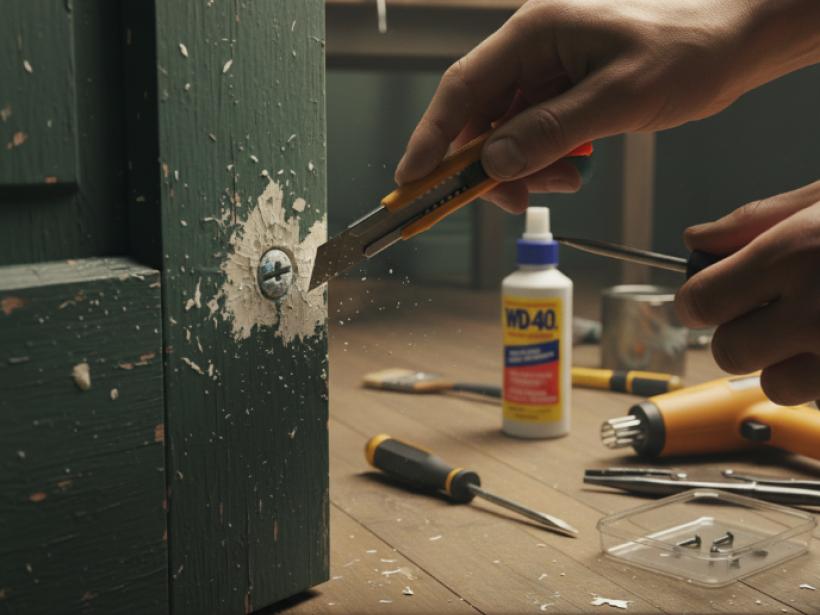

You know the kind I’m talking about – those screws sealed under layers of old, stubborn paint. They’re like tiny metal time capsules from whoever thought painting over hardware was a good idea. The job should’ve been simple: twist, remove, move on. But instead, you’re squinting at a barely-visible screw head, wondering who cursed your weekend project.
Let’s not sugarcoat it. If you don’t know how to remove screws that have been painted over, you’re in for a headache. But there are ways. And some of them actually work.
First Things First –Clear the Gunk
Before you go full demolition mode, try to gently clear the screw head. Paint buildup is usually the main villain here.
Here’s what usually helps:
- Score the edges – Take a box cutter or small chisel and trace around the screw. Be patient. You want to crack the paint without scratching the surface.
- Scrape it clean – Use a flathead to peel away the paint sitting inside the screw head.
- Wipe it down – Get rid of the dust. It clogs the grip.
This alone has saved me more times than I can count. Sometimes the screw just needed to breathe a little.
Still Won’t Move? Warm It Up or Oil It
If the screw still won’t budge, it’s probably bonded tighter than your grandma’s Tupperware lid. Heat and oil can loosen that mess up.
Try this next:
- Apply heat – A hairdryer works, a heat gun works better. Hold it over the painted area for a good 30 – 60 seconds. The heat softens the paint and sometimes breaks the bond inside the hole.
- Add oil – WD-40 or a penetrating oil around the screw head. Let it sit and soak into the cracks for 5 – 10 minutes.
This is my go-to when dealing with screws covered in paint and buried in old wood or rusted in place. Give it time. Don’t rush. Let the oil do its slow, magical work.
If It’s Still Laughing at You – Cut or Drill
Alright. You tried being nice. The screw doesn’t care. Now it’s war.
Here’s how I’ve handled old painted over screws that refused to come out:
- Screw extractor – These things were made for screw-ups. Drill a small pilot hole, insert the extractor, twist in reverse, and pray.
- Locking pliers – If even a hint of the screw is poking out, clamp onto it with vice grips and slowly turn. Sometimes that grip is all you need.
- Power tools – At the very end, you can drill straight through the thing and patch the hole later. Not elegant. But sometimes it’s the only way forward.
Don’t feel bad. Screws can be jerks.
A Few Truths I’ve Learned the Hard Way
There’s no universal trick. Some painted screws come out easy, others act like they’ve been superglued in by a vengeful spirit. That said, here are the things I keep in mind every single time:
- Use the right size screwdriver. Too big or too small, and you’ll strip it.
- Avoid over-twisting. If it starts to come out, stop. Regrip. Breathe.
- Keep a tray nearby for parts. You will lose something tiny. Happens every time.
Learning how to remove a painted screw is like learning to cook with cast iron or drive stick– frustrating at first, then you feel like a wizard once you get it.
If you’re knee-deep in a DIY project, wrestling with screws that haven’t seen daylight since the ’80s, don’t panic. You’ve got options. You’ve got patience. And now, you’ve got the method.
So yeah. Get back out there. Show that tiny piece of metal who’s boss.