
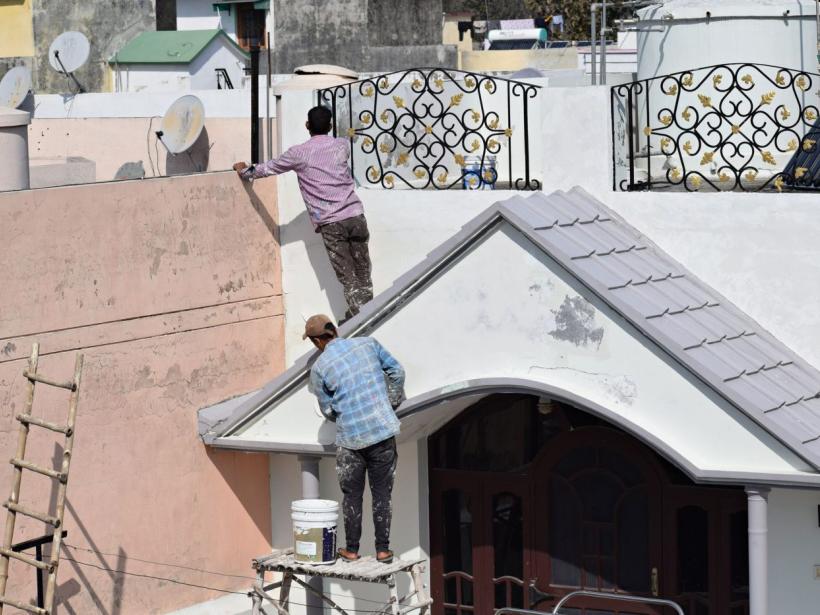
What type of surface am I painting?
Start by identifying the material under your current paint or the bare surface if the house is new. The substrate controls which primer you need and how well the topcoat will stick. Skipping this step is the most common reason fresh paint blisters and peels within a year.
For bare timber weatherboards, you need an oil-based or high-quality acrylic timber primer that soaks into the grain and seals the tannins before the topcoat goes on. Brick and concrete block are porous and strongly alkaline when new, so they need a stabilising primer that resists that alkali attack. Rendered walls often have a powdery surface, and a dedicated sealer binder locks down that dust so the paint grabs something solid. Fibre cement cladding, common on older Australian homes, must be checked for its original factory finish: some early sheets hold paint poorly without a specific adhesion primer.
Previously painted surfaces are easier, but only if the old coating is sound. Wash a small patch, dry it, press a strip of strong tape on firmly and rip it off. If paint flakes come away, you need to scrape, sand and spot-prime those areas. A clean, stable, well-adhered surface is the foundation of any long-lasting exterior paint job.
Acrylic, oil-based or something else?

Water-based acrylics are the standard choice for most Australian exteriors. They flex as the surface expands and contracts through hot days and cool nights, so the paint film is far less likely to crack or peel than a rigid oil-based coat. Acrylics also let moisture vapour escape from the substrate, which reduces blistering on timber and render.
Oil-based enamels still have a place on high-traffic trim and metalwork because they level out to a smooth, hard finish. The trade-off is that they become brittle over time, yellow under UV and need mineral turps to clean up. If you are painting windows, doors or wrought iron, a quality exterior oil-based enamel gives a tough, glossy shell that stands up to knocks and bumps.
- Water-based acrylic: breathes, stays flexible, quick dry and soap-and-water clean-up.
- Oil-based enamel: hard, smooth finish, slower dry, best for trim and metal.
- Hybrid alkyd: behaves like an oil but cleans up with water, good for doors and handrails.
- Self-priming acrylic: saves a step on sound, previously painted surfaces.
- Elastomeric coating: extra-thick film that bridges hairline cracks in render or brick.
- Low-VOC acrylic: carries the low-odour, low-toxicity label and meets Green Star requirements.
For broad wall areas in Australian conditions, a premium exterior acrylic is the most reliable and longest-lasting choice. Reserve oil-based products for the details that need extra hardness, and always check the tin for the manufacturer's recommended substrate and recoat window.
What sheen level works best outside?
A paint's sheen, or gloss level, determines how much light it reflects and how well it stands up to the weather. Higher sheen paints are tougher and easier to wash down, but they also show every bump and wave in the surface.
Flat and matt finishes hide imperfections best because they scatter light rather than reflecting it. They suit weatherboard and rendered walls with minor cracks, though they mark more easily and cannot be scrubbed hard without burnishing. Low sheen is the most practical choice for most exterior walls. It gives enough wipeability to handle dust, cobwebs and light dirt, while still forgiving uneven plaster or timber joins.
Satin and semi-gloss paints are harder and more moisture-resistant, so painters use them on surfaces that get direct rain, splashing or frequent contact. Gloss paints are the toughest and most reflective, which makes them ideal for front doors, window sashes, trims, gutters and downpipes where you want a crisp, cleanable line and a bit of contrast against the main wall colour.
- Flat or matt hides surface flaws but is harder to clean without leaving shiny patches.
- Low sheen offers a balance of washability and forgiveness and suits most wall surfaces.
- Satin gives a subtle lustre and better moisture resistance for trims and sheltered areas.
- Gloss is the easiest to wash and the longest-wearing option for high-touch spots such as doors and handrails.
- Mixing sheens on one house adds depth, flat walls with gloss trims are a classic combination.
- Test a sample patch in full sun before committing, sheen can look far shinier outdoors than on a colour card.
How do I pick a colour that lasts?

Dark pigments absorb more heat and fade faster, especially on walls that face west. The sun’s UV breaks down the colourants over time, so a deep charcoal or navy can look washed out within a few years. Lighter tints reflect heat and hold their colour longer.
Check the Light Reflectance Value, or LRV, on the paint tin or the manufacturer’s data sheet. The scale runs from 0 (absolute black) to 100 (pure white). For timber weatherboards and fibre cement, aim for an LRV of 40 or higher. Some acrylic formulas designed for dark colours use heat-reflective technology, which helps, but the lighter the colour the less heat the substrate absorbs in the first place.
Paint a large sample board, at least a square metre, and move it around the house at different times of day. A swatch on a colour card is too small to show how a colour behaves in full sun, and the same shade can look flat on a southern wall and blinding on a western one.
What makes a paint durable in Australian weather?

Durability comes down to the binder system and the protective additives in the tin. On a north-facing wall in Perth or a coastal home in Sydney, the paint film must handle intense UV radiation, daily temperature swings of 15 degrees or more, and salt-laden moisture. A quality 100% acrylic binder gives the film enough flexibility to expand and contract with the substrate without cracking or peeling. Cheaper paints often use vinyl or PVA binders that harden over time and fail within a few years.
UV resistance relies on titanium dioxide and light-stable pigments. Exterior acrylics formulated for Australian conditions contain a high load of these pigments to slow chalking and colour fade. Look for products that meet AS 3730.6 for exterior durability. Mould and mildew inhibitors are equally important, especially in shaded areas, under eaves and in humid subtropical zones. These biocides are built into the wet paint and remain active in the cured film, stopping fungal growth before it stains the surface.
Binder quality matters more than the price tag. A mid-range paint with a robust acrylic binder will outperform a cheap premium-branded product that skimps on solids content. Check the label for volume solids, anything above 40% gives a thicker dry film and better coverage per coat. A paint that costs a little more upfront but lasts 12 to 15 years saves you two repaints over the same period.
How much paint do I need and what prep is required?
A rough calculation stops you buying too much or running short on a Sunday afternoon. Measure the area of each wall in square metres (height times width) and add them together, then subtract the space taken up by windows and doors. Most exterior acrylics cover about 12 to 16 square metres per litre per coat, so divide your total area by the lower coverage figure to get the litres needed for two coats.
Preparation determines how well the paint sticks and how long it lasts. A painter would follow these steps before opening a tin:
- Wash the walls with a stiff broom, sugar soap and a low-pressure hose to remove dirt and chalky residue.
- Scrape away loose or bubbling paint with a pull scraper, then sand the edges smooth with 80-grit paper.
- Fill cracks and holes with a flexible exterior filler, leave it to dry, and sand it flush.
- Mask windows, downpipes and garden beds with drop sheets and quality low-tack tape.
- Spot-prime bare timber, metal or filled patches with a suitable primer so the topcoat bonds evenly.
Frequently asked questions
Can I use interior paint on an exterior wall if it is under a verandah?
No. Interior paints lack the UV stabilisers and mould inhibitors needed outdoors. Even under a deep verandah, moisture and temperature swings will cause interior paint to fail quickly. Always choose a paint labelled for exterior use.
Do dark colours really fade faster on a facade?
Yes, dark pigments absorb more UV radiation and heat, which breaks down the binder and causes fading or chalking sooner. If you love a deep colour, pick a formula with high-quality inorganic pigments and check the manufacturer's lightfastness rating.
Is it worth paying more for a premium exterior paint?
In most cases, yes. Premium paints contain more binder and better pigments, so they cover in fewer coats, resist dirt and fading longer, and stay flexible as the building moves. The extra cost often works out cheaper over a decade than repainting sooner with a budget product.
How long should a good exterior paint job last in Australia?
A well-prepared surface painted with a quality acrylic can last 7 to 15 years, depending on exposure. Coastal salt spray, full western sun and bushfire-prone areas may shorten that lifespan, while a sheltered wall in a mild climate can go longer.
Photo: Rajesh S Balouria, Pexels (Pexels License)