
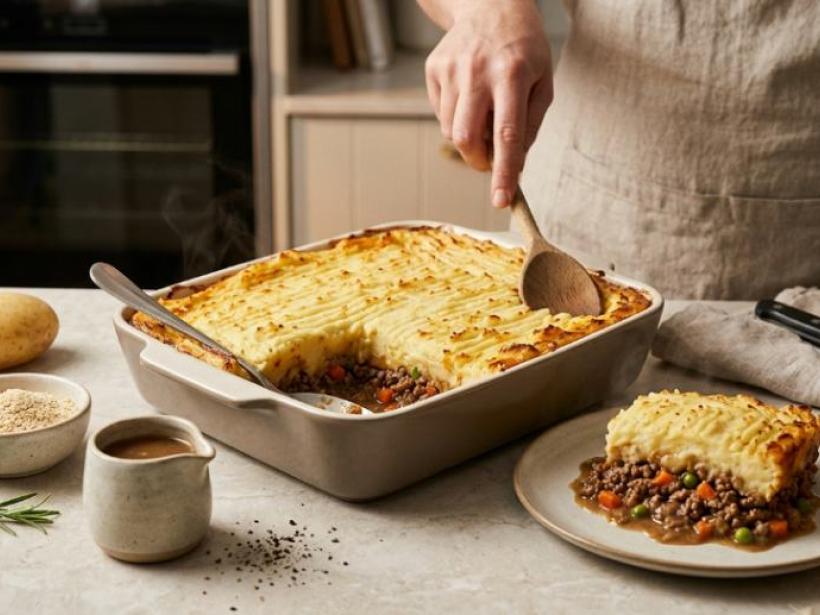

Most shepherd's pie advice stops at "drain the meat and use a roux." That's true, but it's not why pies still turn watery even when you do everything right. The real issue is usually structural, not just liquid volume.
The part nobody explains: why the filling escapes
Bake a pie in a dish with straight sides and the gravy has nowhere to go but up and out around the edges of the mash. If your potato topping doesn't touch the dish wall on all sides, you've left a gap for that to happen.
The fix: press the mashed potato right up against the glass or ceramic, all the way around, like sealing a lid. Use the back of a spoon to smear a thin ridge into the corner. This one detail stops more bubbling-over than any amount of extra flour in the gravy.
A barrier layer most recipes skip
Before you add the mash, sprinkle a thin layer of dry breadcrumbs or crushed crackers over the meat. It's a trick from savory pot pie fillings that rarely gets mentioned for shepherd's pie. The crumbs soak up the last bit of moisture that a roux won't catch, without changing the taste. You don't need more than 2 tablespoons for a 9x9 dish.
The ratio that actually matters
Forget exact cup measurements. What matters is the ratio: for every 1 lb of meat, use about 1 cup of thickened gravy and 1.5 to 2 lbs of potatoes before mashing. Go heavier on potato and the filling reads as dry once cut. Go lighter and it runs. This ratio holds whether you're using lamb, beef, or lentils — it's the same balance that makes a minted lamb and rosemary hot pot work too.
Why resting matters more than people think
Recipes say "let it rest for 10 minutes." The reason is starch. When gravy is thickened with all-purpose flour or potato starch, the starch molecules keep absorbing liquid as the dish cools, not just while it's cooking. Cut into it right out of the oven and you're cutting into gravy that hasn't finished setting. Ten minutes isn't a suggestion, it's the last cooking step.
Two versions worth knowing
Vegetarian: swap the meat for a mix of lentils and mushrooms, browned the same way. Mushrooms release their own liquid as they cook, so reduce the added stock by about a quarter compared to the meat version, or you'll end up with the exact watery problem you were trying to avoid.
No-vegetable version: if you're making this for picky eaters, straight meat and gravy under mash works fine. The vegetables aren't what holds the pie together, so skipping them doesn't change the texture — it just changes what's for dinner.
If you like slow-cooked lamb but want something different next time, lamb shanks in rich tomato sauce use the same low-and-slow logic.
Quick reference
|
Detail |
Why it matters |
|
Seal mash to dish edges |
Stops gravy escaping while baking |
|
Add a thin breadcrumb layer |
Catches leftover moisture without a taste change |
|
1 lb meat : 1 cup gravy : 1.5–2 lb potato |
Keeps filling from drying out or running |
|
Rest 10 minutes before serving |
Starch keeps thickening as it cools |
None of this replaces a good gravy or well-drained meat. It just explains the parts of the process that usually get skipped: why the edges leak, what to do about the last bit of moisture, and why cutting in too early undoes the work you already put in. Shepherd's pie sits alongside dishes like corned silverside as one of those meals that shows up across Australian comfort food traditions for good reason — it's forgiving, and it feeds a crowd.