Is the mould on the surface or in the wall?
Surface mould usually wipes away easily with a cloth and a cleaning solution, leaving the paint or plaster intact underneath. If the wall itself feels soft, spongy or crumbly when you press it with your finger, moisture has soaked into the substrate and the mould is growing from inside the wall cavity. That deeper damage points to a persistent water leak or failed waterproofing, not just steam settling on a cold surface.
Check the same spot a day or two after cleaning. Mould that returns in exactly the same pattern, especially on a wall that stays dry to the touch, often means the gyprock or timber behind the paint is still damp. Cleaning the visible patch without fixing the source of moisture will only buy you a week or two before the mould reappears. A moisture meter from most hardware shops gives you a quick reading without guessing. Anything above about 15 per cent in gyprock suggests a hidden problem.
If the patch feels firm and the mould stays away after a thorough clean, you are likely dealing with condensation-related surface growth. That is the scenario where a proper clean and better ventilation will solve the problem. When the wall is soft or a musty smell lingers even after drying, stop and investigate for a plumbing leak, roof leak or failed grout before you spend time on cosmetic cleaning.
What safety gear do I need before cleaning mould?

Put on protective gear before you open any cleaning product. Mould spores become airborne the moment you scrub a patch. Inhaling them or letting them touch your skin can trigger a reaction, even if you have never been sensitive before. The gear is cheap and you likely have most of it at home already.
- A P2 respirator mask stops you from breathing in spores. A disposable P2 mask from the hardware shop is fine. A paper dust mask is not enough.
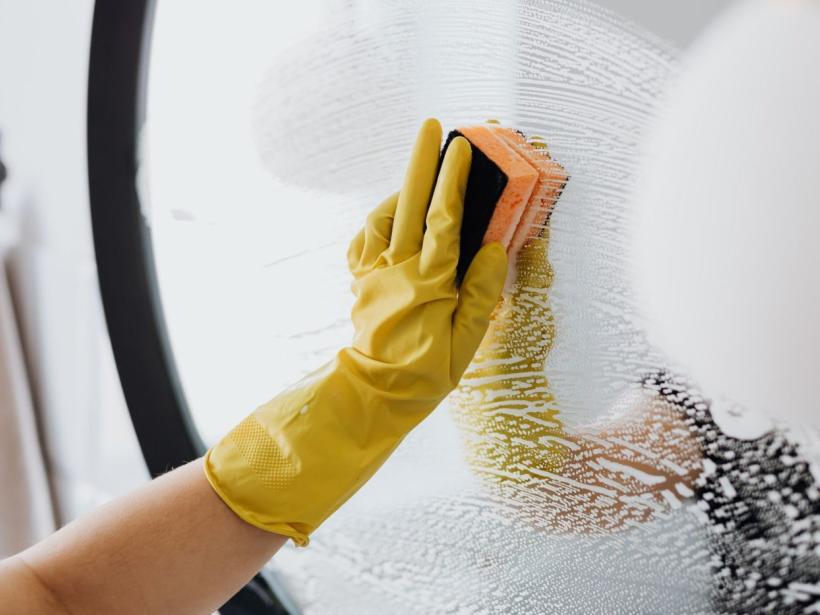
- Rubber gloves keep cleaning chemicals and mould off your hands. Long cuffs that cover your wrists are better than short dishwashing gloves.
- Safety glasses protect your eyes from splashes of bleach or vinegar, especially when you are cleaning overhead.
- Old clothes that you can take off straight after the job and wash in a hot cycle, separately from other laundry.
Close the bathroom door and open a window or switch on the exhaust fan before you start. Keep the P2 mask on until you have finished wiping down surfaces and left the room to air out.
How to clean mould off painted walls and ceilings

Start with the gentlest cleaner that works. Harsh scrubbing or bleach can strip the paint film and leave a permanent dull patch. Fill a spray bottle with plain white vinegar, undiluted, and mist the affected area until it is visibly wet. Let the vinegar sit for at least an hour so the acetic acid can penetrate and kill the mould roots, not just the surface bloom.
Wipe the wall with a damp microfibre cloth, using light pressure. Rinse the cloth often in a separate bucket of clean water so you are not just smearing mould across the paint. For stubborn staining, a commercial mould killer labelled as paint-safe is a better choice than bleach. Apply it strictly according to the label. Open the window and run the exhaust fan during the whole job. Never mix vinegar with bleach or other household cleaners, the combination creates toxic gas.
After the wall dries, check the finish in daylight. If the paint has gone chalky or the colour has lifted, the mould has likely damaged the film from underneath. In that case the area needs a light sand, a stain-blocking primer and a fresh coat of mould-resistant bathroom paint, cleaning alone will not restore the surface.
How to remove mould from silicone sealant and grout

Silicone sealant and grout are porous, so mould often grows below the visible surface. A surface wipe with household cleaners rarely reaches the roots. For grout, a stiff nylon brush and a paste made from bicarbonate of soda and a small amount of water can lift shallow stains. Apply the paste, scrub in a circular motion, let it sit for ten minutes, then rinse and dry the area thoroughly with a clean cloth.
Silicone is trickier. If the mould is light and caught early, you can try scrubbing with a dedicated mould-killing gel that carries a hospital-grade disinfectant claim on the label. Work the gel into the bead with an old toothbrush and leave it for the dwell time stated on the pack before rinsing. But if the silicone has turned soft, black staining runs deep inside the bead, or the seal has lifted from the tiles, cleaning will not fix it. Cut out the old silicone with a sharp utility knife, clean the joint with methylated spirits, let it dry completely, and apply a fresh bead of sanitary silicone labelled for wet areas. A tube costs a few dollars and the job takes under an hour for a standard shower.
How to stop mould coming back in the bathroom
Mould returns when moisture lingers on surfaces for more than 24 to 48 hours, so the only lasting fix is to keep the bathroom drier. Start by checking that your exhaust fan actually moves air: hold a square of toilet paper against the grille while the fan runs. If the paper does not stay on its own, the fan is weak, clogged with dust or venting into the roof space instead of outside. Clean the grille and fan blades, and have a sparkie check the ducting if the airflow is still poor.
Small daily habits make a bigger difference than occasional deep cleans. Squeegee the shower walls and glass after the last use of the day, and leave the bathroom door and window open for at least ten minutes. If your fan is switched separately from the light, fit a run-on timer so it keeps extracting for 10 to 20 minutes after you leave the room. Fix dripping taps and leaking shower heads promptly, because a slow leak behind a wall panel or vanity feeds mould you cannot see until the damage is extensive.
- Run the exhaust fan during every shower and for at least 15 minutes afterwards, or install a timer switch that does this automatically.
- Squeegee tiles and glass after the last shower of the day to remove water before it evaporates into the air.
- Leave the bathroom door and a window open after use to create cross-flow ventilation that clears humid air quickly.
- Fix dripping taps, leaking shower roses and cracked grout as soon as you notice them to stop water seeping into hidden cavities.
- Wash bath mats and towels weekly, and hang them spread out rather than bunched up so they dry fully between uses.
- Check the ceiling and skirting boards for condensation on cold mornings; if it forms regularly, a small dehumidifier run for an hour after showering can help while you improve insulation or heating.
Frequently asked questions
Can I just paint over bathroom mould?
Painting over mould traps it and it will grow back through the new paint within weeks. You need to kill and remove the mould first, let the wall dry completely, then apply a stain-blocking primer before repainting.
Is bleach the best way to kill mould on walls?
Bleach can remove the stain on non-porous surfaces but does not kill the roots of mould on porous materials like plasterboard. White vinegar, which is mildly acidic, penetrates better and kills most common household moulds at the root.
When should I call a professional for bathroom mould?
Call a professional mould remediator if the affected area is larger than one square metre, if the mould keeps returning after you clean it, or if you can smell mould but cannot find the source. This often points to a hidden leak inside the wall or ceiling.
Photo: kaboompics.com, Pexels (Pexels License)