How does a thermal cooker cook beef stew?
A thermal cooker works in two stages: you bring the stew to the boil on the hob, then seal the inner pot inside the insulated outer pot and let stored heat finish the cooking. Once the lid is on, no power is used at all, so the pot keeps cooking wherever you leave it. A typical hold time is four to six hours for beef stew, depending on the cut and how much you have in the pot.
This sets it apart from an electric slow cooker, which needs a power point for the whole cooking time. If you are weighing up the two appliances, the site's general slow cooker guide covers how they compare in day-to-day use.
For stew, that means tender beef without watching a stove, and you can cook ahead for dinner at the caravan, the worksite kitchen or a friend's place. The trade-off is that you cannot lift the lid to check progress, because the heat escapes the moment you do.
Which beef cut makes the best stew?

Chuck and gravy beef are the best cuts for a thermal cooker stew. Both come from the shoulder and shin, where the muscles work hard, so they carry plenty of connective tissue. Long moist heat turns that tissue into gelatine, which is what gives the sauce body and keeps the meat from drying out.
Buy about 1 kg of boneless beef for four people, or 1.2-1.3 kg if the pieces carry bone. Look for meat with fine visible seams of fat and a deep red colour. Pale, dry-looking cubes have usually been trimmed too lean and will turn stringy.
- Chuck steak suits a thermal pot because it holds its shape through a long hold.
- Gravy beef breaks down faster and gives a thicker, richer sauce.
- Trim hard fat and silverskin, but leave the fine marbling in place.
- Cut the meat into 4-5 cm chunks so they stay tender rather than shredding.
- Avoid lean cuts such as topside, round or fillet, which tighten and dry out.
- Skip pre-diced "stewing beef" unless you can see the grain and fat.
Do you have to brown the beef first?
Browning is optional, but it does most of the work for flavour and colour. Browning the meat gives the stew a deeper, more savoury taste than boiled beef alone. In a thermal cooker, where the outer pot simply holds heat, you get no further browning after transfer, so the hob stage is your only chance.
Use a heavy-based pan or the thermal pot's own inner pot over medium-high heat with a tablespoon or two of vegetable or rice bran oil. Dry the beef cubes with paper towel first, then brown them in batches so the pieces sit in a single layer. Crowding the pan drops the temperature and the meat steams in its own juices instead of colouring. A couple of minutes per side is enough.
You can skip browning if you are short on time. The stew will still cook through and taste good, just paler and milder, so a spoonful of tomato paste stirred in at the start helps compensate. If you do brown, deglaze the pan with a splash of stock or water and scrape up the browned bits, then add that liquid back to the pot so none of the flavour is lost.
How long does the pot stay on the hob?

Plan on 10-15 minutes from cold to sealed. Bring the inner pot to a full boil over high heat, then hold a rolling boil for 5-8 minutes before moving it straight into the outer pot. A stew that has browned beef and cold stock in it can take closer to 15 minutes to reach that stage.
Watch for a steady roll across the whole surface rather than a few bubbles at the edge. Once you see it, start timing. Cut the heat, lift the pot with oven mitts, and seal it in the insulated outer pot within a minute or two. Every minute the stew sits uncovered on a hot plate loses heat you need for the hold.
Hobs vary in how quickly they bring a heavy pot to the boil, so judge by the bubbles, not the clock. If the boil is weak, give it another 2-3 minutes rather than moving it early.
How long do you leave it in the thermal pot?
Most beef stews need 4 to 6 hours in the sealed outer pot to become tender. Chuck and gravy beef can take closer to the top of that range, and a full pot holds heat longer than a half-empty one, so judge by the cut and the fill level rather than the clock alone.
Do not open the lid while the pot is doing its work. Every lift releases the stored heat, and once the temperature drops below about 60 C the cooking slows right down and food safety becomes a concern. If you want to check progress, do it once, near the end of the range, and work quickly.
To test, the beef should pull apart with little resistance and the vegetables should be soft all the way through. If it is still firm, return the inner pot to the hob, bring it back to a rolling boil for a few minutes, seal it again and give it another 1 to 2 hours. Serve the stew hot straight from the pot, and chill any leftovers promptly rather than letting them cool in the thermal cooker.
Thermal cooker beef stew recipe for four

This recipe makes four generous serves from about 1 kg of chuck or gravy beef. You need a thermal cooker with an inner pot that fits on your hob, plus a frypan if you brown the meat separately.
- 1 kg beef chuck or gravy beef, cut into 3-4 cm pieces
- 2 tablespoons plain flour, 2 tablespoons olive oil
- 2 onions, 3 carrots, 2 celery stalks, 1 red capsicum, all roughly chopped
- 2 garlic cloves, 2 tablespoons tomato paste, 500 ml beef stock
- 250 ml red wine or extra stock, 2 bay leaves, 1 teaspoon dried thyme
- Salt and pepper, a handful of chopped parsley to finish
1. Toss the beef in seasoned flour. 2. Heat the oil in the inner pot and brown the beef in batches over high heat, then set it aside. 3. Soften the onion, carrot, celery and capsicum for 5-6 minutes, add the garlic and tomato paste and cook for 1 minute. 4. Return the beef with the stock, wine, bay leaves and thyme. 5. Bring to a full boil, hold it there for 5 minutes with the lid off, then seal and transfer to the outer pot for 3-5 hours without opening the lid. 6. Season and scatter with parsley.
For a stovetop or oven version, simmer covered on low for 2-2.5 hours, or bake at 150 °C for 2.5-3 hours, until the beef pulls apart with a fork. Serve hot straight from the pot and refrigerate leftovers within 2 hours.
What can go wrong with a thermal pot stew?
The most common problem is beef that is still chewy when you open the pot. If the meat has not softened after the holding time, tip everything back into the inner pot, bring it to a gentle simmer on the hob for 20 to 30 minutes, then return it to the outer pot for another hour or so. Tough cuts like gravy beef need more total cooking time than the pot delivered.
Too much liquid is another common problem, because nothing evaporates while the pot is sealed. If the stew looks soupy, simmer it uncovered on the stove at the end until it thickens, or stir through a slurry of a tablespoon of cornflour mixed with cold water.
Scorching on the base usually happens during stage one, so keep the heat at a steady simmer rather than a rolling boil, and stir once before you lid the pot. If anything has caught, transfer the stew to a clean pot rather than scraping burnt bits back through the meal.
Serve the stew hot straight from the pot and refrigerate leftovers within two hours. Reheat portions until steaming throughout, and never leave food to cool down inside the thermal pot.
Frequently asked questions
Can I leave beef stew in a thermal cooker all day?
Yes. Most stews are tender after 4-6 hours in the sealed pot, and holding longer is fine as long as the lid stays on. Open it only when you are ready to serve, and serve hot rather than leaving the food to cool in the pot.
Is a thermal cooker the same as a slow cooker?
No. A slow cooker plugs in and holds a set temperature for hours. A thermal cooker has no power: you heat the food on the hob, seal it in an insulated outer pot and the stored heat finishes the cooking.
Why is my thermal pot stew tough?
The beef was probably not held long enough, or the pot was opened partway through and lost its heat. Return the inner pot to the hob, bring it back to the boil briefly, reseal and hold for another 1-2 hours.
Can I add vegetables at the start?
Yes, if you cut them into even, fairly large pieces so they do not collapse during the long hold. Potatoes, carrots and celery work well. Quick-cooking vegetables are better added after cooking, when you reheat the stew on the hob.
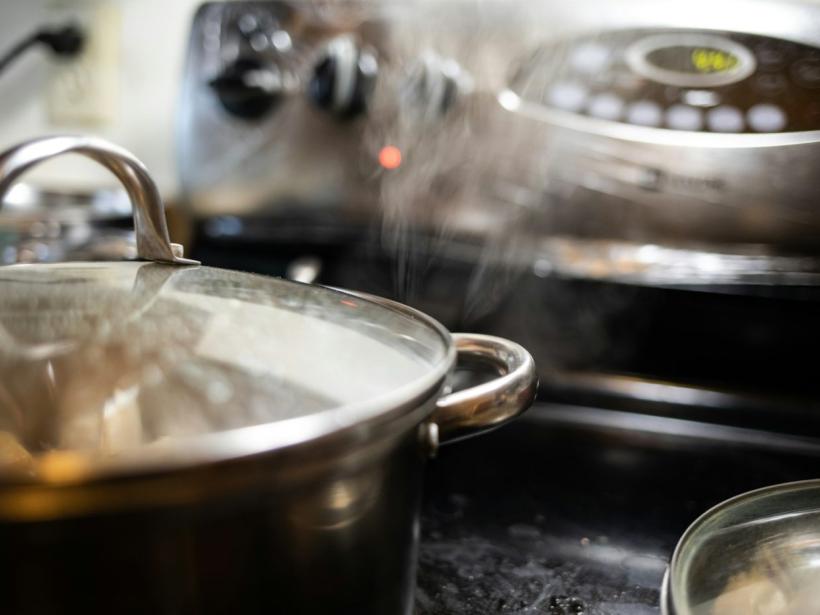
Photo: Frank Zhang, Unsplash (Unsplash License)