
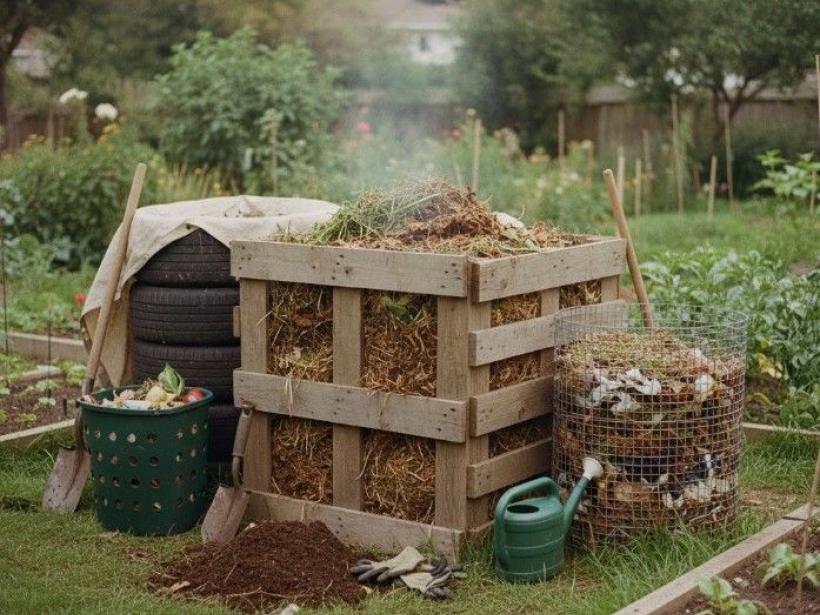

Building a garden waste receptacle is often a bewildering endeavor for those unaccustomed to the terrestrial alchemy of decomposition. You might imagine that creating a vessel for putrefying organic matter necessitates sophisticated engineering or costly acquisitions from specialized purveyors. Actually, most of the requisite components for such an apparatus are likely languishing in your immediate vicinity, awaiting a productive secondary utility.
Why Construct a Receptacle from Industrial Pallets?
Timber pallets represent an overlooked treasury for the horticultural enthusiast, providing a structural framework that facilitates atmospheric circulation. By opting to construct a diy compost bin out of pallets, you are effectively engaging in a sophisticated form of material reclamation. These wooden assemblies are frequently obtainable without monetary expenditure if one communicates effectively with local logistical enterprises.
The spatial intervals between the wooden slats serve a vital function, ensuring that the internal temperature remains elevated while oxygen permeates the central mass. Without such pulmonary ventilation, your collection of refuse will descend into a malodorous, anaerobic state that repels even the hardiest of earthworms.
What Are Some Economical Methods for Waste Containment?
If heavy timber is unavailable, one might consider the repurposing of high-density polyethylene vessels or antiquated refuse containers. A cheap diy compost bin functions effectively regardless of its aesthetic appeal, provided it maintains sufficient thermal retention and moisture equilibrium. You can metamorphose a common storage unit into a functioning biological reactor by manually perforating the exterior with a series of small apertures.
- Polymer Totes: These units are remarkably effective for restricted metropolitan environments where a sprawling wooden edifice would be impractical.
- Metallic Mesh: Cylindrical configurations of hardware cloth offer a rapid, highly breathable solution for those prioritizing immediate functionality over permanence.
- Vulcanized Rubber Stacks: Utilizing discarded vehicular tires creates a modular, heat-absorptive chamber that accelerates the metabolic rate of the resident bacteria.
Such diy compost bin ideas demonstrate that environmental stewardship does not necessitate a depletion of one’s financial reserves. You simply require a barrier that prevents the dispersal of nitrogen-rich and carbon-heavy materials until the transformation is complete.
Which Configuration Suits Your Terrestrial Requirements?
Selecting a compost bin design diy project requires an evaluation of the volume of kitchen residuals your household generates. A singular chamber might suffice for the solitary dweller, yet a tripartite system remains the definitive choice for the serious cultivator. This arrangement permits the distinct stages of introduction, maturation, and eventual extraction of the finished humus.
Securing the contents prevents the unwelcome intrusion of local fauna or scavengers who might otherwise redistribute your decomposing salad across the driveway. A substantial cover or a fragment of heavy textile serves to trap heat while discouraging the presence of inquisitive vermin.
Commencing Your Fabrication Project Immediately
Assemble your mechanical fastening tools because a compost bin diy task shouldn't occupy more than a brief afternoon. Ensure the selected site is level to prevent a structural failure during periods of high precipitation. Direct contact with the underlying soil is mandatory, as it permits the migration of subterranean organisms into your burgeoning pile of waste.