
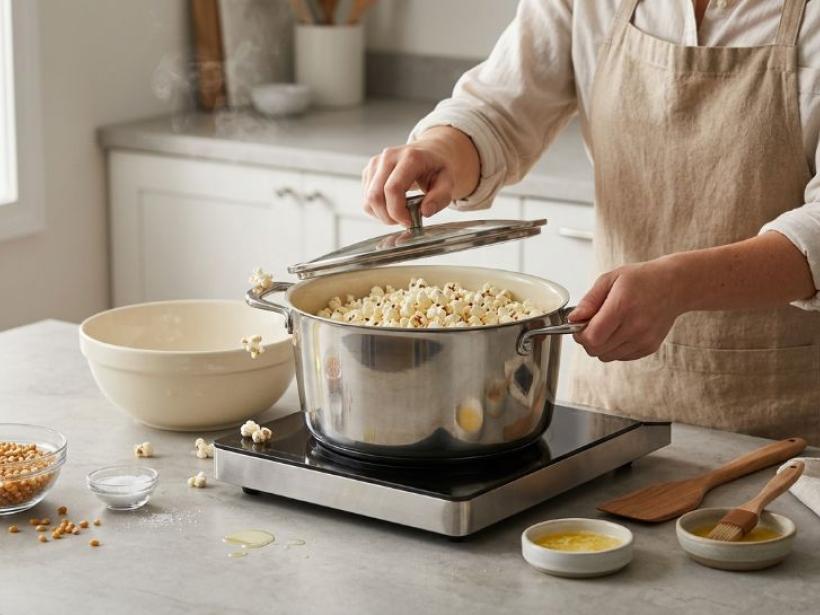

Stovetop popcorn takes about 5 minutes, needs just kernels, oil, and a lid, and beats bagged microwave popcorn on both cost and ingredients. If you've ever ended up with half-popped kernels or a burnt layer at the bottom, the fix usually comes down to two things: the right pot, and pulling it off the heat at the right moment. Here's exactly how to make popcorn on the stovetop so it comes out light, crisp, and fully popped.
What You Need
- 1/2 cup popcorn kernels
- 3 tablespoons oil (coconut, canola, or another high-smoke-point oil)
- A heavy-bottomed pot with a lid (around 3–4 litres works well)
- Salt or seasonings of choice
A heavy-bottomed pot matters more than the recipe usually lets on. Thin pans heat unevenly, so part of the batch burns while the rest barely pops. A dutch oven or a solid stainless saucepan holds steady heat across the whole bottom, which is the main reason recipe testers keep landing on the same type of pot.
How to Make Popcorn on the Stove, Step by Step
- Heat the oil. Add the oil to the pot and set it over medium-high heat.
- Test with a few kernels. Drop in 3–4 kernels, cover, and wait until they pop. That's your signal the oil is hot enough.
- Add the rest of the kernels. Pour in the remaining kernels in a single layer, cover, and lift the pot off the heat for about 30 seconds. This lets every kernel come up to temperature at roughly the same rate, instead of the bottom layer popping first and burning while the top layer lags behind.
- Return to heat and shake. Put the pot back on the burner, crack the lid slightly so steam can escape, and shake it gently every 20–30 seconds.
- Listen for the slowdown. Once the pops are more than 2–3 seconds apart, pull the pot off the heat.
- Pour and season immediately. Tip the popcorn into a bowl right away so it doesn't steam in its own heat and go soft. Season while it's still hot – salt and butter stick better.
Why Does My Popcorn Burn Before It's Done Popping?
This almost always comes from leaving the pot on full heat the whole time, or using a thin pan that develops hot spots. Pulling the pot off the burner for 30 seconds after adding the kernels – rather than leaving it on continuous heat – gives the slower kernels time to catch up before the fast ones scorch. If burning is still an issue, drop the heat slightly and shake more often.
How to Make Stovetop Popcorn Without Oil
Yes, you can make stovetop popcorn without oil, though the texture and pop rate change slightly. Use a dry, heavy pot over medium heat, add the kernels in a single layer, cover, and shake constantly. Without oil to conduct heat evenly, kernels are more likely to scorch on one side before popping, so lower heat and near-constant shaking matter more here than in the oiled version. Expect a slightly denser, less fluffy result, and season with melted butter or a spray oil afterward if you want richer flavour without cooking in fat.
Is Homemade Stovetop Popcorn Actually Healthy?
Plain popcorn is a whole grain, and that part of its reputation holds up – it sits in the same category as rolled oats porridge in that sense. Air-popped popcorn runs around 31 calories per cup, while oil-popped comes in closer to 55–60 calories per cup – still a modest snack either way. What changes the calorie count fastest isn't the popping method, it's what goes on top afterward: a light hand with salt and a drizzle of butter stays reasonable, while a heavy coating of butter and cheese powder puts it in the same range as chips. If you want the lowest-calorie version, air-pop it or use the no-oil stovetop method above and season lightly. If popcorn's got you thinking about other things to snack on, our roundup of healthy snacks for adults covers a few more.
Tips for Really Good Stovetop Popcorn
- Match the oil to the heat. Coconut oil, canola oil, and peanut oil all have a high enough smoke point for this method. Skip extra virgin olive oil – it smokes too early.
- Don't skip the pre-heat step. Testing with 3–4 kernels first stops you from either underheating the oil (leads to chewy, dense kernels) or scorching it before the rest go in.
- Keep the lid cracked, not sealed. A fully sealed lid traps steam, and trapped steam makes popcorn go soft and chewy instead of crisp.
- Salt while it's hot. Fine salt sticks to warm, slightly oily popcorn far better than it does once it's cooled.
FAQ
How long does it take to make popcorn on the stovetop?
About 5–7 minutes total, most of it spent heating the oil and waiting for the popping to slow down.
What's the best oil for stovetop popcorn?
A high-smoke-point oil – coconut, canola, or peanut oil all work well. Avoid extra virgin olive oil, which smokes and burns before the kernels finish popping.
Why are some of my kernels not popping?
Unpopped kernels ("old maids") usually mean the kernels have dried out or the heat wasn't even across the pot. Fresh kernels stored in an airtight container pop more reliably than an old, half-used bag.
Can I make stovetop popcorn without butter?
Yes – salt alone, or a light spray of oil with seasoning, works fine. The butter is for flavour, not for the popping process itself.
Is stovetop popcorn cheaper than microwave popcorn?
By a wide margin. A bag of loose kernels makes many batches for close to what a single box of microwave bags costs.
Once you've got the basic method down, the variations are easy: skip the oil for a lighter version, swap in different seasonings, or double the batch in a bigger pot for movie night. If you're planning a proper movie night spread, a bowl of this alongside our spinach cob loaf dip covers both the salty and the shareable. And if homemade snacks are your thing, our homemade granola bars are worth trying next. The pot, the heat, and the timing are what matter with popcorn – everything else is just topping.