
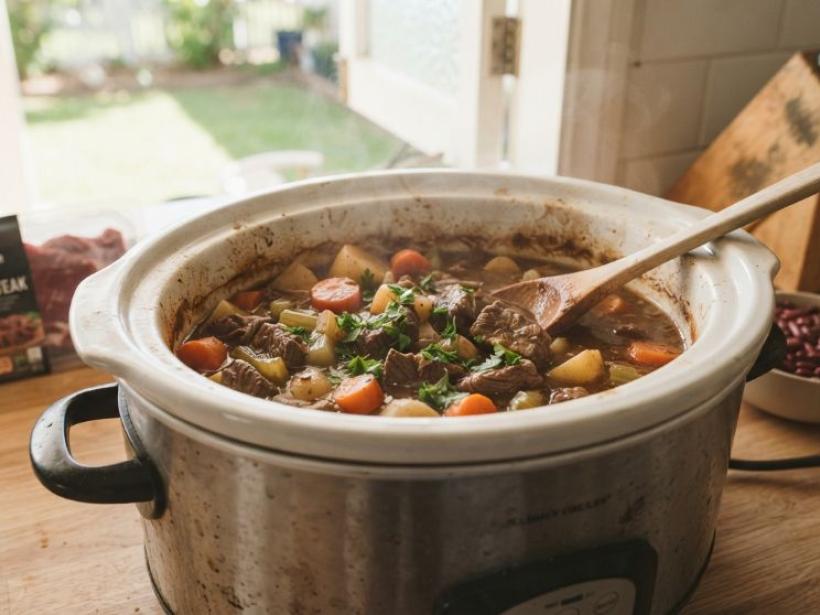

A slow cooker earns its place in an Australian kitchen the same way a good knife does: it does one job better than anything else in the drawer. Cheap cuts of meat, dried legumes, whatever's wilting in the crisper, go in one end and come out the other end as a meal, with almost no attention paid in between. It works for beef, chicken, lamb and pork. It works just as well without any meat at all.
Key takeaways:
- Tougher, cheaper cuts (chuck, blade, lamb shoulder, pork shoulder) suit a slow cooker better than lean or premium ones.
- Vegetarian cooking works fine here too, but only if the vegetables go in at different stages instead of all at once.
- "Healthy" slow cooking comes down to ingredients and portions. The appliance doesn't do that part for you.
- Dried red kidney beans should never go in raw. That one isn't a matter of taste.
What Makes a Recipe Suit an Australian Slow Cooker
Cheaper, tougher cuts win here. Chuck steak, gravy beef, lamb shoulder, pork shoulder: all of them carry enough connective tissue to break down over six to eight hours, and that breakdown is what makes the meat fall apart instead of turning to string. Try the same trick with chicken breast or eye fillet and you'll get the opposite result. Lean cuts overcook fast in a slow cooker, so they either go in near the end of the cook or they belong in a different recipe altogether.
Seasonality also plays out differently here than it does in slow cooker content written for a northern-hemisphere audience. Stews, curries, soups: all of that traffic peaks from May through August, no surprise there. But a slow cooker earns its keep in a Queensland summer just as much, for anyone who'd rather not heat the kitchen with an oven for three hours. Recipes written only for cold-weather use miss half the people actually searching.
How Do Vegetarian Slow Cooker Recipes Hold Up?
Better than most people expect, as long as the vegetables go in at the right point rather than all together. Root vegetables, think potato, pumpkin, sweet potato, carrot, hold their shape for the full cook and can go in at the start with the legumes and lentils. Softer vegetables don't get the same treatment. Zucchini, spinach, capsicum turn watery and lose all texture after six-plus hours, so they're better stirred through in the last 30 to 45 minutes.
Dahl. Chickpea and lentil curries. Bean-based chilli. These convert to a slow cooker almost without trying, because most cuisines already cook them low and slow by tradition. A stir-fry does not convert the same way, no matter how tempting it looks on a recipe card. The method fights the dish instead of suiting it.
Can Slow Cooker Meals Really Help With Weight Loss?
They can support it. What they can't do is make a bad set of ingredients into a healthy meal on their own. Two things the method genuinely has going for it: fat renders out of meat instead of crisping into it, and the low, even heat pulls flavour from lean proteins and vegetables without needing much oil or butter to get there.
The adjustments that actually move the needle are simple. Trim visible fat before cooking. Skim what rises to the top once it's done. Swap cream-based sauces for stock. Bulk a dish out with vegetables and legumes instead of more meat. None of this is unique to Australian kitchens, but it does explain why "healthy slow cooker" content leans so hard on chicken, lentils and vegetable stews, and so rarely touches pork belly or a rich, creamy curry.
What Works for Family Dinners on a Weeknight
Two things, really: recipes that don't demand a last-minute finishing step, and flavours mild enough that kids will actually eat them without a fuss. Bolognese. Shredded chicken tacos. Sausage casserole. A mild curry. All four hold up because they can be served over rice, pasta or bread depending on who's at the table, without touching the base recipe.
A shepherd's pie fits the same brief, even though it's usually finished in the oven rather than the slow cooker start to finish: slow-cook the mince filling during the day, top it with mash and grill it for ten minutes once everyone's home. Same principle as the rest of this list, just with one extra step at the end.
Batch cooking is the other reason families lean on a slow cooker. Most stews and curries freeze well, so one Sunday afternoon can cover two or three weeknight dinners down the line. A recipe that says "serves 4, freezes well" tends to get made again and again, far more than a one-off dish ever does. Worth remembering if the content is aimed at a household juggling three schedules, not a solo cook.
The One Ingredient That Needs Extra Care First
Dried red kidney beans should never go into a slow cooker raw. They carry a natural toxin, phytohaemagglutinin, at high enough levels that undercooking can cause serious nausea and vomiting. The problem sits specifically with the appliance: a slow cooker's low, steady heat usually doesn't get hot enough to destroy that toxin, even after hours on the clock. FDA guidance is to soak the beans first, then boil them in fresh water for at least ten minutes before they go anywhere near the slow cooker or any other dish. Canned kidney beans skip this step entirely since they're already fully cooked during processing. Other dried beans, black beans, chickpeas, don't carry the same risk and can go in without pre-boiling.
It's one of the only real safety issues in slow cooking, and most recipe collections don't mention it at all. Better to say it plainly here than bury it in a footnote nobody reads.
FAQ
Do I need to brown meat before adding it to a slow cooker?
No. Browning first adds flavour through caramelisation that the slow cooker won't produce on its own. Optional, not required, and it makes a real difference if you have the extra five minutes.
What's the difference between cooking on low and high?
Same final temperature either way. Low just takes roughly twice as long as high. Tougher cuts do better on low over a longer stretch, since that's the slower breakdown they need.
Can I put frozen meat straight into a slow cooker?
Better not to. Frozen meat can sit in the temperature range where bacteria grow before the slow cooker heats it through properly. Thaw it in the fridge first.
Do vegetables go in before or after the meat?
Root vegetables go in at the bottom, meat on top, since they take longer to soften. Delicate vegetables go in during the last 30 to 45 minutes, or they overcook.
Is a slow cooker cheaper to run than an oven?
Generally, yes. It draws far less power over the same cooking window, which is part of why it stays popular through the colder months, right when energy bills are already climbing.