
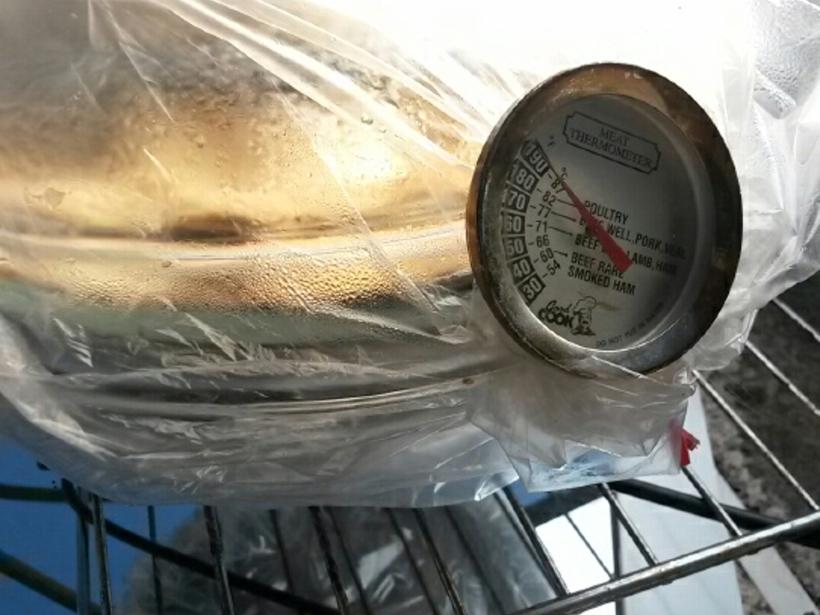
Most food poisoning at home does not come from exotic ingredients. It comes from a pot of chili left on the stove through an evening, a tray of rice that sat out after dinner, or a casserole carried to a party in a warm car. The common thread is what food safety people call the temperature danger zone: the range where bacteria multiply fastest.
You do not need a culinary degree to stay on the right side of it. You need two numbers, a thermometer and a few habits. If you rely on a slow cooker, start with these slow cooker recipes that actually work and keep the temperatures below in mind.
The two numbers
Professional kitchens in the United States follow the model rules in the FDA Food Code, which treats 41°F (5°C) as the upper limit for cold food and 135°F (57°C) as the lower limit for hot food. Anything between those two points is where bacteria grow quickly.
Home cooks can borrow the same logic. Keep cold food cold, keep hot food hot and do not let anything linger in the middle.
Four situations where food drifts into the danger zone
- A slow cooker set to warm that actually runs too low
- A buffet or potluck spread left out for hours
- A large pot of soup cooling on the counter overnight
- Lunch boxes without an ice pack
How to cool food quickly
Big batches, such as a large pot of creamy pumpkin soup, are the biggest problem, because the center of a deep pot stays warm for a long time. Divide soups, stews and rice into shallow containers so they cool faster, and put them in the refrigerator without waiting for them to reach room temperature first.
A pot placed in an ice bath in the sink, and stirred now and then, will drop in temperature much faster than one left on the stove. Cover the food loosely until it is cold, then seal it.
Setting up a potluck so it stays safe
Group meals are where the danger zone does the most harm, because food sits out while people talk. A few simple choices help a lot. Serve hot dishes from a slow cooker on the high or warm setting that holds them above 135°F (57°C), and keep cold salads in a bowl set inside a larger bowl of ice.
Put out smaller portions and refill from the kitchen instead of leaving one big tray on the table all afternoon. A dish that has been out for two hours should be thrown away, and on a hot day the limit drops to one hour. It feels wasteful, but it costs far less than a weekend with a stomach bug.
A short checklist before you serve or store
- Check that the refrigerator stays at 41°F (5°C) or below with a cheap appliance thermometer
- Use a food thermometer to confirm hot dishes are at least 135°F (57°C) when served
- Put perishable food away within two hours, or within one hour on a hot day
- Reheat leftovers until they are steaming hot throughout
- When in doubt about how long something sat out, throw it away
The last point matters most. Reheating does not make every kind of spoiled food safe, and some toxins left by bacteria survive heat.
Common questions
Can I trust the smell test? No. Many harmful bacteria do not change the look, taste or smell of food.
Is a cooler with ice good enough for a picnic? It works if it is packed full and kept closed. Put perishable items in the center and keep the cooler in the shade.
How long are leftovers safe in the refrigerator? Three to four days is the usual guidance, so label containers with the date. Sushi is a special case, covered in our guide on how long sushi lasts in the fridge.
Photo: Laura Arroyo, public domain, Wikimedia Commons